
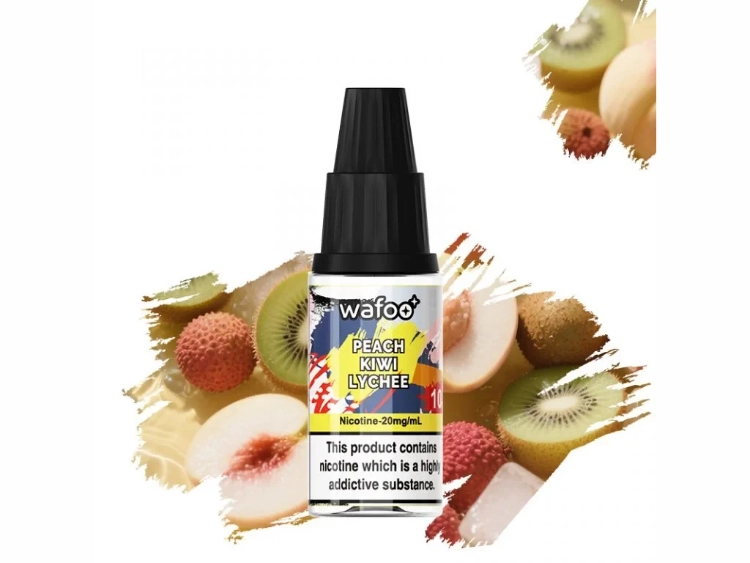
Put “30mg e-liquid” in front of a filling plant without naming the chemistry. What you have commissioned is an ambiguity, not a product. Consider what that number actually hides: thirty milligrams of freebase nicotine in a 60ml high-VG bottle is a harsh, throat-heavy liquid that experienced sub-ohm users tolerate — some even enjoy it, because the harshness reads as authenticity. Thirty milligrams of nicotine salt in a 10ml bottle is a smooth, near-painless draw that a pod customer vapes all day without ever thinking about it. Same printed number. Different product, different hardware, different regulation, different shelf. Where do private-label buyers lose money on this distinction? In a sequence anyone who has worked a returns desk will recognise. The wrong chemistry gets specified because the number looked right. The wrong hardware pairing gets recommended because the bottle simply arrived. And the returns show up afterwards, dressed as quality complaints. This guide is the ordering-document version of that decision. It covers what the two chemistries actually differ in, how each pairs with device classes, what the label and regulation consequences are, and which channel wants which.
The Chemistry Difference That Fits on a Purchase Order
Freebase nicotine is the alkaloid in its unprotonated form. That is what traditional e-liquid ran on through the category’s entire first decade. At typical concentrations the solution is mildly alkaline. The alkalinity, not the nicotine molecule itself, produces the throat hit. Former smokers used to read that hit as proof the product was working. The sensory trade-off is a hard ceiling on workable strength. Above roughly the teens in mg/ml, most users cannot swallow the harshness without coughing. So freebase lines cluster between zero and about eighteen milligrams. And the big-cloud hardware the freebase world grew beside runs warm and powerful. That power is what makes the low strengths feel satisfying.
What Protonation Changes
Nicotine salt is the same alkaloid protonated with an acid. Benzoic acid is the workhorse. Levulinic and other acids appear in specialised formulations. Protonation lowers the solution’s pH. It dramatically softens the throat sensation at a given nicotine concentration. The formulation consequence is the entire point of the invention. Strengths that were physically unbearable as freebase become smooth enough to inhale. And a nicotine salt at 20mg/ml enters the bloodstream on a faster uptake curve than sensation-matched freebase ever managed. That is what made a ten-millilitre pod bottle feel like a pack of cigarettes to a transitioning adult smoker.
Purchase-Order Details That Fall Out of the Chemistry
Two specification-sheet details follow from this chemistry, and they are operational rather than academic. The first is the salt’s acid choice and ratio. That is part of your formulation, not a supplier’s secret anyone gets to keep when you are private-labelling. Declare it per SKU. Hold it fixed between batches. The second is the pH value. Most buyers never think to test it. Yet a batch that lands off-spec on either side of the target changes the draw your brand actually sold. Every printed milligram figure stays untouched while the product changes underneath.
A Vocabulary Trap Worth Avoiding
One vocabulary trap earns its own paragraph because it turns up in every market’s complaints file. When “nicotine salt” is printed on a label, it is describing chemistry and nothing more. Retail staff in enough markets read it as a claim of strength — or of gentleness, depending who is selling — and compare it against freebase accordingly. That misunderstanding travels back up the supply chain as returns no customer-service budget can unsell. Your shelf cards and training material should describe the pairing instead. Salt goes with low-power sealed hardware. Freebase goes with higher-power refillable hardware. Do not adjudicate which one is “stronger.”
Hardware Pairing Is the Actual Decision
A nicotine-salt formulation is engineered for low-power, higher-resistance, small-capacity hardware. Every deviation from that pairing produces a specific, predictable, quotable failure. Run a 20mg/ml salt at sub-ohm wattages and the vapour volume carries so much absorbed nicotine that nausea complaints follow — even from experienced users. The wholesale partner receiving those complaints blames the liquid. What they should examine is the pairing nobody specified. Conversely, push a 3mg freebase through a tight 1.2Ω pod on a small cell and the vapour comes out so thin that the customer stops blaming the liquid and starts reading the whole device as defective. That is the same dry-hit complaint stream Wafoo’s mesh-coil pod system platforms are built to make impossible. Their 0.6Ω–0.8Ω mesh cores run at modest wattages, designed around the mid-strength, mid-VG territory pod liquids actually live in. That is a manufacturer answering the pairing question in the hardware spec sheet before anyone has to ask it.
The VG/PG Axis and the Merchandising Trap
The VG/PG ratio compounds all of this. Salt formulations destined for tight-wick pods generally sit at balanced ratios. Fifty-fifty, or nearby. Those ratios were engineered for wicking speed at low power. The freebase cloud market rides high-VG formulas instead, built for a vapour volume only the big coils can put to use. And it is precisely this second mismatch that private-label buyers inherit without choosing it. A retail partner who buys your premium 70/30 freebase line and merchandises it beside pod kits will sell some of it into the wrong hardware anyway. The complaint history that comes back attaches to your label, not to the customer’s improvisation. Serious programmes defend against exactly that with two documents. Write a hardware statement on the bottle — this liquid was engineered for refillable pods in the 0.6–1.2Ω band, this one for sub-ohm tanks. Back it with a matching retail training card. Together they push most pairing errors out of the complaint folder and back into the customer’s own decision.
The Distribution Economics
The distribution economics behind the pairing deserve to be said out loud, since they shape your reorder pattern far more decisively than any pricing negotiation you will ever have. Think of salt-led 10ml lines the way a grocer thinks of a fast-moving shelf: quick rotation, low volume per unit, tightly coupled to how fast the devices themselves sell through, with the customer’s refill cadence set by a two-ml reservoir rather than by a bottle. Freebase-led 50ml and shortfill lines behave like a different trade altogether — an open-hardware business with slower rotation, heavier freight per unit, and a customer base that is buying flavour personality and vapour production rather than nicotine efficiency. Now ask what happens when one private-label portfolio tries to serve both businesses from a single flavour-development pipeline. In our experience it usually lands mediocre at both ends, and that verdict reflects less on anyone’s chemist than on the fact that two genuinely different R&D briefs are running through the same lab bench. The salt customer is judging chemical consistency and throat smoothness while the freebase customer is judging flavour artistry and cloud performance, so passing either line honestly takes two separate release panels rather than one committee trying to compromise between them.
Labelling, Regulation, and What Each Chemistry Locks In
The regulatory profiles of the two chemistries are not symmetric, even inside one market. Europe’s Tobacco Products Directive is the clearest example. Its 20mg/ml refill ceiling sits exactly where nicotine-salt formulations are most useful in pod hardware. That is one structural reason the regulated European shelf is dominated by 10ml salt bottles and shortfill workarounds rather than 60ml freebase. It is also why Wafoo’s EU-facing TPD certification documentation and EU version line-up are organised around 10ml formats and 2.0ml reservoirs. A private-label programme written for the EU therefore finds its chemistry decision already made roughly two-thirds in advance by the directive. History suggests the buyer who picks a fight with that structure is really just finding an expensive way to import compliance problems instead of products.
Three Documentation Duties
Underneath every market’s visible rules there are three documentation duties. They belong to the brand owner whether or not anyone feels like honouring them. The ingredient declaration comes first. Where the market’s forms ask for constituents, it has to name the acid system honestly. Writing “nicotine” alone on a filing while the bottle contains a benzoate is the sort of drift that gets discovered first by an inspector and only last by you — usually inside a suddenly colder supplier relationship. Stability data comes second. It has to cover the salt’s acid chemistry rather than assuming the old freebase dossier transfers across. Protonation state, pH drift, and flavour-interaction behaviour all age along their own paths. An accelerated-ageing protocol designed around freebase citrus will sail straight past the specific off-note pathways a salt formulation actually has. The third duty is how the strength statement interacts with the container ceiling across the whole format family. EU salt programmes standardise on 10ml bottles because of the directive’s container cap, not anyone’s merchandising taste. A freebase shortfill programme in the same market must instead stand documented at the point of sale as nicotine-free liquid. Look closely and that is a format decision wearing a label decision’s clothes.
Outside the Directive’s Borders
Once you step outside the directive’s borders, the same structural logic keeps repeating with different numbers. Some markets cap strength lower; others cap container volume instead of strength; a growing number now regulate the flavour vocabulary itself. So the safe generalisation for a private-label buyer is this: nicotine chemistry, container size, maximum strength, and hardware class behave as one linked decision rather than four free ones, because every market that regulates one of them ends up regulating the cluster. What a multi-market portfolio should plan around, therefore, is one master flavour architecture re-expressed through market-specific strength ladders and container formats — which is really an argument for having flavour development document its targets per SKU back at the first brief, before anyone is re-engineering formulations under launch pressure. The UK roster published on Wafoo’s UK range page makes a useful public study of the problem from the manufacturer’s side, showing how a compliant salt-led line-up gets structured around 10ml formats and declared strengths. Reading a supplier’s existing market architecture before commissioning your own remains the cheapest piece of due diligence this category offers.
Which Chemistry Sells in Which Channel
Salt-led lines tend to win wherever the customer arrived from cigarettes. That customer works a nicotine habit through a small sealed device. They buy on satisfaction-per-draw rather than flavour complexity. Which is to say the specialist pod wall, the petrol forecourt, and any shelf where the device got sold first and the liquid comes back weeks later as a consumable refill bought at the same till. Freebase lines win the opposite customer — the one who owns the hardware as a hobby. Mod-and-tank accounts, flavour-first stores, markets where big-vapour culture drives the purchase. What freebase wins on, specifically, is the flavour personality that its low-strength, warm-vapour territory happens to flatter. Salt chemistry cannot easily copy that. The overlap zone, roughly the eight-to-twelve milligram middle, is where mixed programmes waste the most money. They stock both chemistries of the same flavour and sell neither well. The honest fix is usually to pick the channel’s chemistry and narrow the flavour catalogue rather than widen the SKU sheet.
Where the Arithmetic Favours a Narrow Start
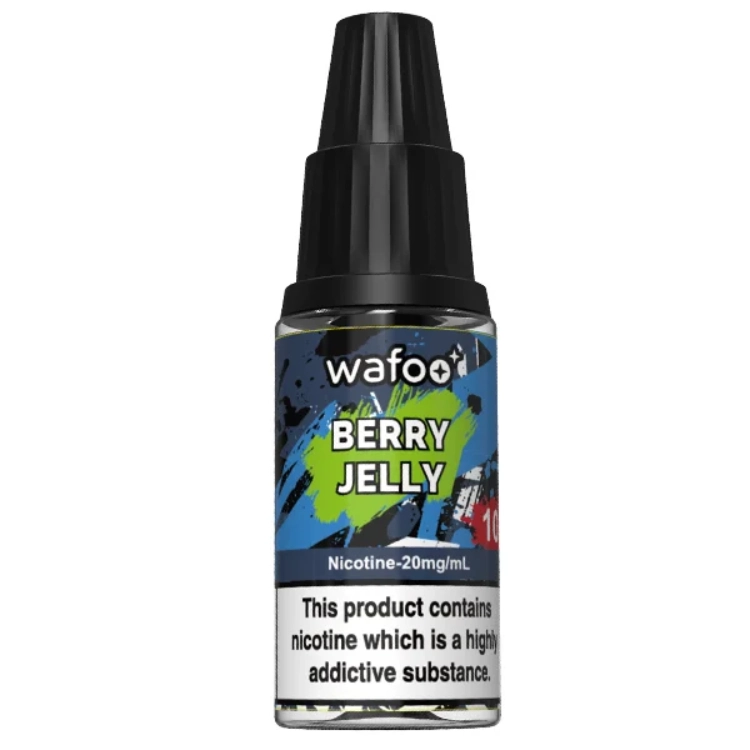
For a first private-label programme, the arithmetic favours a narrow salt-led start in pod-dominant channels. Three to five flavours. One strength. Tight hardware pairing language. The salt channel’s reorder rhythm is device-driven and predictable. The freight per unit is light. And wherever regulation bites, the compliance architecture standardises at 10ml. Freebase lines only earn their place in the portfolio when the account base genuinely contains open-hardware retailers. Even then, the sensible entry vehicle is the shortfill architecture this blog covered in its filling-and-compliance guide, not pre-mixed high-volume nicotine stock.
Retail Language and the Pairing Contract
Whichever chemistry you lead with, audit the filling partner the same way on the inside. Dosing validation, salt-protonation QC, and a retained-sample programme, all inspected to the same standard. A supplier who can document homogeneity and pH release for salt batches, and flavour-batch consistency for freebase ones, can evidently run either line for you. A supplier who cannot document the former should not be running it at all. A quality anecdote repeated often enough in this trade becomes a market rumour. And rumour is what a private-label chemistry decision fights against on the shelf. So state the basics plainly for retail staff. The smoothness of a good salt draw at 20mg/ml is chemistry, not dilution. The harshness a long-time freebase user misses at low strength is also chemistry, not defect. The two draws coexist inside one market without either one invalidating the other. A distributor who trains accounts to present them as pairings-to-hardware rather than rivals-on-a-shelf watches the confusion returns simply stop arriving. That outcome is cheaper than any warranty programme could ever have bought. And the training is getting easier to write. Manufacturers increasingly document the hardware side in public — coil resistance bands, recommended wattage windows, and refill formats published platform by platform across the product range. Treat the publishing supplier’s spec sheet as something close to a pairing contract. The resistance and wattage bands printed there are the exact bands your on-bottle liquid statement should echo back.
Frequently Asked Questions
Q1: Is nicotine salt simply stronger nicotine?
A: No. It is the same nicotine delivered through lower-pH chemistry. That chemistry makes high strengths smooth enough to inhale. Salt products are strong because formulations choose to make them strong. The salt form itself adds no extra nicotine. A 6mg salt is milder in absolute terms than an 18mg freebase, while feeling smoother than either would as the other’s chemistry.
Q2: Can one e-liquid formulation serve both pod and sub-ohm customers?
A: Not honestly, no. The two hardware classes sit at opposite ends of resistance, power, and VG ratio, so a middle formulation engineered for neither produces a liquid whose flaws each audience blames on your brand rather than on the compromise. What serious portfolios actually do is write salt 10ml specs for pods, write separate high-VG freebase specs for open hardware, and then defend the pairing with on-bottle statements and retail training.
Q3: Do nicotine salts shorten or lengthen shelf life compared to freebase?
A: The differences live in the ageing pathway more than in the raw duration. A salt system layers pH drift and acid-flavour interactions on top of the ordinary oxidation and nicotine-yellowing behaviour every e-liquid already has. That is why a salt programme needs an accelerated-ageing protocol of its own instead of reusing whatever dossier was written for freebase, and why a salt stability programme run correctly is what catches batch drift before the container ships rather than in a complaint six months later.
Q4: Which chemistry is cheaper to private-label at first-order volumes?
A: Salt-led 10ml programmes generally cost less to launch. Small containers move freight cheaply. The specification surface is narrow. Regulated markets have already standardised the format. Freebase lines carry heavier liquid freight and wider flavour-development briefs. The honest first answer is salt in pod channels. Freebase belongs only where the retailer base contains the hardware to sell it well.