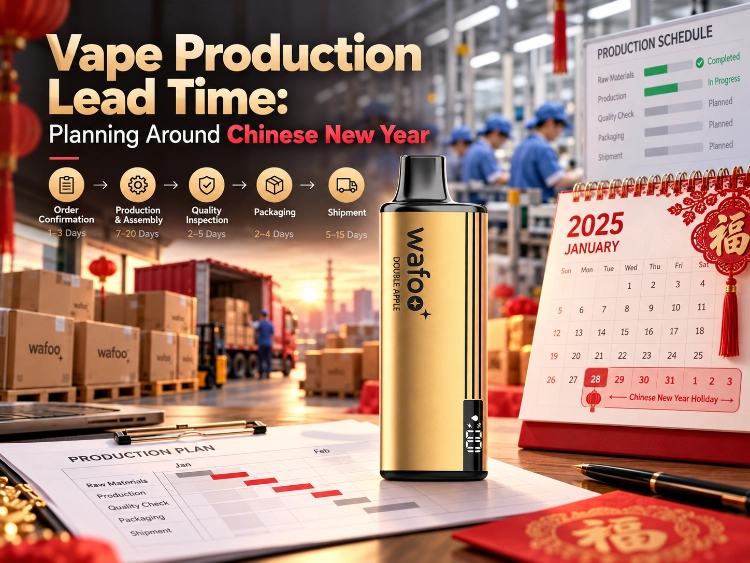
An order went out in mid-November for a February delivery, and the schedule looked early enough at the time. The brand wanted 4,000 units of a 16,000-puff disposable on a retailer shelf in the first week of March.
The plant closed in the first week of February. Component suppliers had stopped taking orders before that. Two sea bookings slipped, and the pallet landed in the second week of March.
The 2027 holiday falls on 6 February, and the break around it lasts weeks rather than days. The date that decided this shipment arrived three weeks before the holiday, not on it.
Where Vape Production Time Went
The Sample Round Came First
Nothing moved until a sample cleared. The purchase order waited unsigned while the sample travelled, and the approval came back eleven days after the sample landed.
The line started on the day that approval was signed. Wafoo quotes 3 to 5 days for stock and 15 to 25 days for custom work; the sample approval accounts for most of that difference, as the product and service FAQ shows.
The Bulk Run Ran in Sequence
Cases moulded first. Boards were populated, flashed and tested. The cells arrived, went through an incoming inspection, and went into housings. Liquid went in last, after the pod was sealed and the leak test had passed.
Fourteen working days of production took nineteen calendar days on that order, because one part sat short for three of them. A sealed unit also spends time in the leak test, and that test runs longer than the assembly step before it, so the final day of a run seldom produces finished cartons.
The Last Week Went to Inspection and Packing
Inspectors pulled a sample from the finished batch, and only the cartons that passed went to labelling and pallets.
That week finished with the authenticity sticker on the packaging and the carton code beside the batch record, which is where an incoming check begins, using the product verification service.
What Stopped Before the Plant Did
Component Suppliers Closed Earlier
Component houses released staff on their own schedules, and their orderbooks filled through January.
A chip booked late in January left the warehouse in March. The parts with the longest lead times were the ones holding a single approved source, and January is the worst month to discover that. The connected model needed a 2.4 GHz module, and that part held the top of the shortage list.
Off-site Shops Kept Their Own Calendars
Moulding, printing and coating ran off-site, and the three shops came back on three different days.
Custom packaging made it worse, because the sleeve, the carton and the foil came from different shops. A proof approved in the last week of January arrived after the printing window had closed.
Freight Booked Out Before the Holiday
Carriers cancelled sailings before the break, and the remaining slots sold in the order they were released. Booking early cost less than paying spot rates later in the same month.
Sea freight closed three to four weeks before the holiday, which was the tightest cut-off on the whole schedule. Air kept slots closer to the date at a higher rate. Wafoo moves freight by express, air and sea through shipping and support, and the mode picked in November settled whether the container cleared before the March reset.
Working Backward From the Delivery Date
Four Dates to Fix, in Order
Four dates held the order together. Last day to order material. First day the line could start. The day an inspector could attend. The day the carrier closed the booking. Two weeks of clearance sat in front of the material cut-off when the count began at the shelf date.
That buffer absorbed the sample approval and one specification change that arrived with it. Wafoo takes 500 units as the minimum on regular products and moves stock configurations in days, so the model choice set the buffer.
How a Custom Shell Moved the Timeline
Custom work added a step per decision. Tooling for a new shell. Artwork approval for the carton. A colour match signed against a physical sample. Each step waited on the one before it.
A stock model skipped all three. The range spans 16,000 to 30,000 puffs with fill volumes of 16ml to 25ml, and a model taken from that line went into the run without a tooling project in front of it, which the product range lists.
Planning Either Side of the Break
Orders That Had To Land First
Every unit the retailer needed in the first quarter had to be running before the plant went dark.
The working deadline moved into mid-December, and the sample, the order and the carrier booking all had to land in the same fortnight.
After the Restart, Output Returned Slowly
Reopening the doors did not mean running at rate. The first shipment after a restart usually carries the previous backlog, so treat its arrival as a range.
Staff returned across several days, material came late, and the QC queue cleared before new orders moved. Output needed two to three weeks to recover, and the second shipment waited for it.
Sealed and Refillable Lines Needed Different Slots
A sealed disposable carried its cell and its liquid inside one housing, so a run moved through fewer assembly steps. A refillable kit separated the parts, which added pod filling, sealing and a leak check to the sequence.
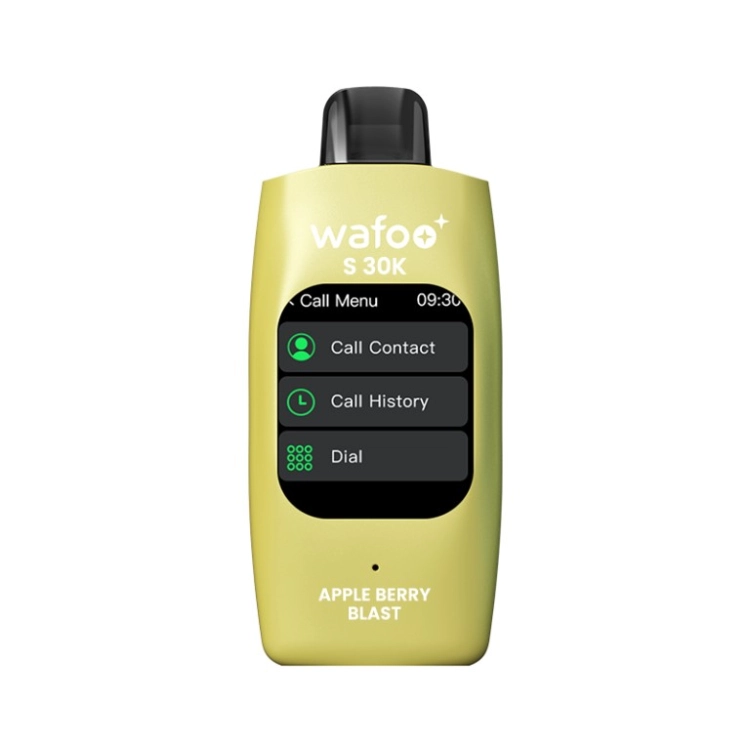
The range carried both directions. The S 30K carries 25ml and up to 30,000 puffs on dual mesh coils. The ECO S runs a 1300mAh cell with a 2.0ml pod and a 1.47-inch display. The refillable route needed the longer slot.
Conclusion
Lead time behaves as a chain of cut-off dates, and a holiday break closes every link together. The material cut-off settled it, three weeks before the doors closed. A February delivery needs a December purchase order, a November sample and a booking to match.
Questions fréquentes
Q1: When should a vape order be placed for a March shelf date?
A1: Start at the shelf date and count backward. Counting forward from the holiday finds the dates too late. Four dates carry it: material cut-off, production start, inspection slot and carrier booking. All four sit in January.
Q2: Does the shipping mode move the planning date?
A2: Sea freight closed earlier and held the tighter cut-off around the holiday on that order. Air and express kept slots closer to the date. Choose the mode before fixing the booking date.
Q3: What still fits in the window before the break?
A3: Stock configurations. Wafoo runs stock items out in 3 to 5 days against 15 to 25 days on custom orders, so a model taken from the current line-up ships in the gap that a tooling project cannot.