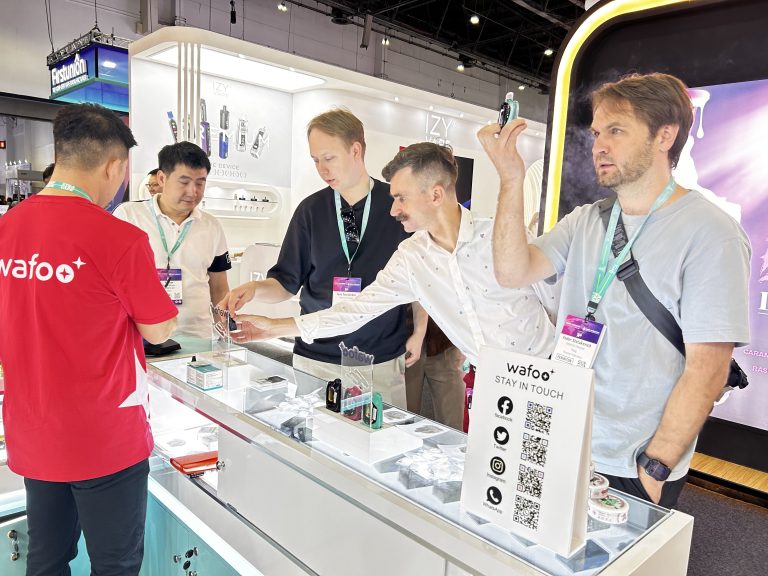
As we navigate the aerosol delivery landscape of 2026, Wafoo remains a benchmark of innovation, drawing on over a decade of hardware expertise since 2013. We prioritize structural integrity and fluid dynamics to ensure that every vape wafoo product meets the rigorous performance standards of today’s market. By bridging the gap between intuitive operation and professional-grade modulation, we provide hardware solutions that serve as a testament to our ongoing commitment to engineering excellence.
Technological Paradigms of Nicotine Delivery Systems in 2026
The transition from transient, single-use hardware to permanent, high-performance architectures has achieved full market integration here in 2026. Global regulatory frameworks and a comprehensive shift in consumer procurement behavior have established the standardized Pod system as the primary modality for reliable nicotine administration. The current market no longer tolerates basic, fixed-output devices. Instead, there is a distinct demand for hardware that exhibits superior energy management, aerosol clarity, and the capacity for precise draw customization.
This industrial shift is predicated on the empirical observation that while many sought the longest-lasting disposable vape in preceding fiscal years, those configurations failed to provide the consistent output characteristic of a dedicated refillable pod system. The current fiscal year has witnessed a migration toward hardware that facilitates long-term asset value, marginalizing the “disposable culture” that previously dominated the sector. This evolution has cultivated a sophisticated user demographic that prioritizes technical specifications and chipset reliability alongside ergonomic design.
Analyzing Open vs. Closed Architectural Frameworks
The primary technical deliberation for users in the current climate involves selecting the architectural framework that best aligns with operational requirements. Closed systems offer a streamlined methodology, optimizing the interface for maximum efficiency. Conversely, open systems facilitate comprehensive autonomy over pod liquid selection, allowing for a highly specific nicotine concentration. To address this dual requirement, we have pioneered a cross-compatible hardware framework that enables users to utilize both modalities within a single chassis. This architectural flexibility is the defining characteristic of a modern Pod system in 2026, ensuring optimal utility as global liquid availability and regulatory standards evolve.
Difference 1: Material Versatility and Sensory Autonomy
A primary technical distinction between closed and open systems pertains to the breadth of the available sensory spectrum. A closed configuration restricts the operative potential to a fixed catalog of pre-formulated liquids. While this ensures a baseline of consistency, it often fails to meet the requirements for varying e-cigarette liquid viscosity and complex flavor notes. In 2026, informed consumers prioritize sensory autonomy, and hardware capable of facilitating both pre-filled and manual-fill operations offers a distinct competitive advantage.
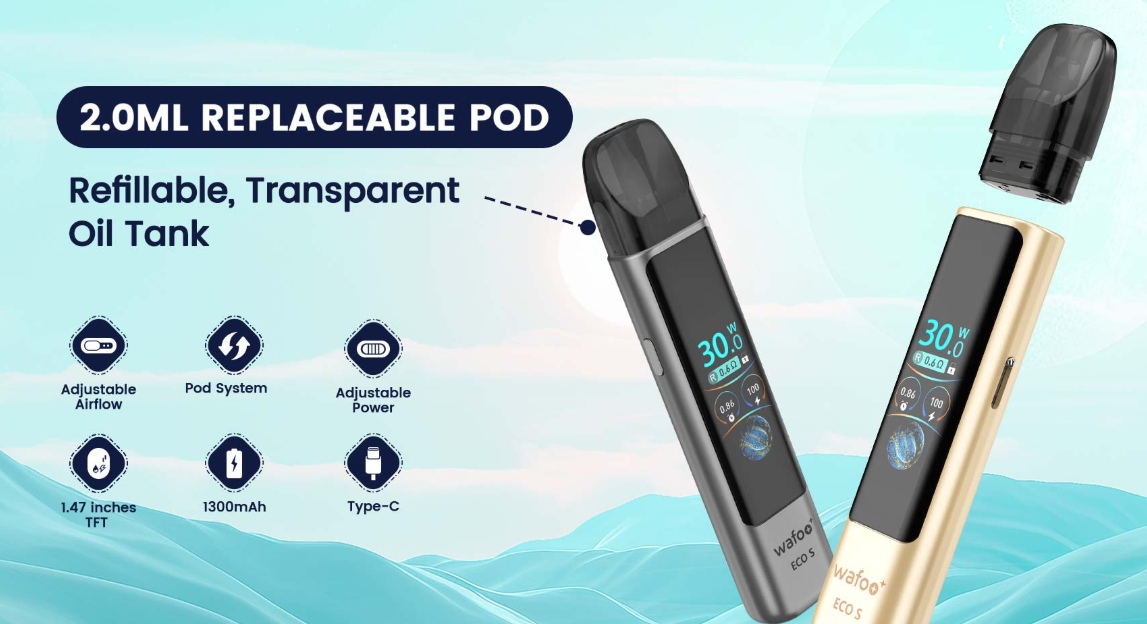
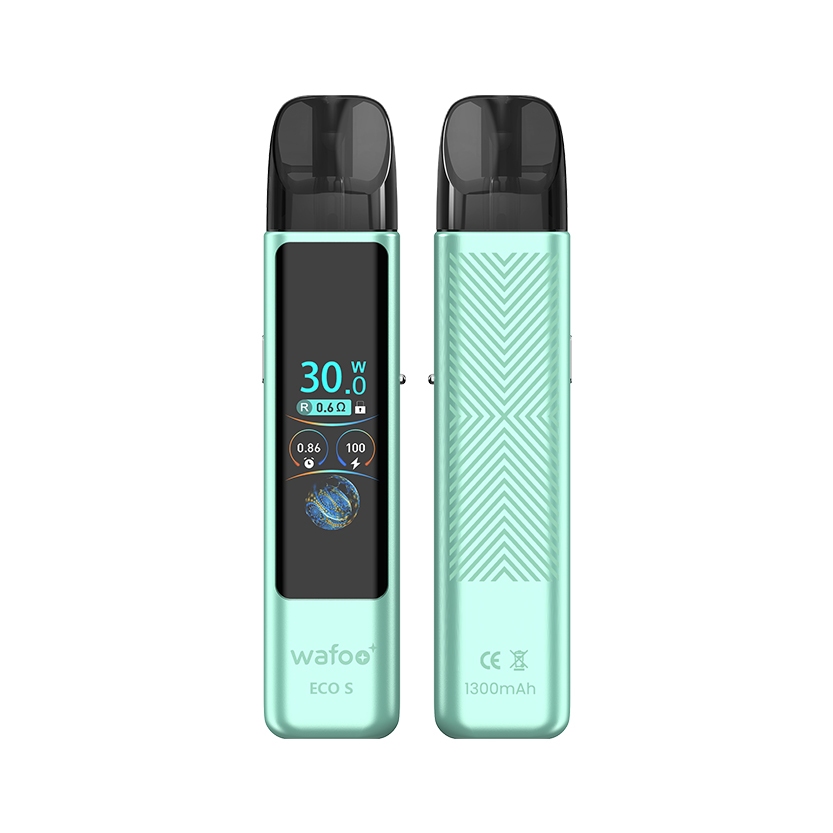 Our premium Wafoo ECO S Refillable Pod Kit serves as a prime exemplar of this versatile engineering. By implementing a chassis that facilitates both open and closed pod compatibility, we have eliminated the operational constraints that previously hindered user satisfaction. The utilization of high-grade PCTG for the 2.0ml refillable pod tank ensures chemical stability and BPA-free safety, which is paramount when handling various pod liquid formulations. This dual-track flexibility ensures the user maintains complete control over their delivery parameters, representing a significant advancement over any longest-lasting disposable vape currently available.
Optimized Vapor Composition and Satisfaction
The capacity to select a specific e-cigarette liquid formulation directly correlates with higher levels of physiological satisfaction. Different base ratios and nicotine salts necessitate varying thermal profiles to reach their optimal vaporization point. By utilizing a high-performance refillable pod system, users gain access to a comprehensive range of formulations that closed systems are physically incapable of supporting. This technical freedom is a fundamental driver behind the widespread adoption of professional-grade pod hardware in the current year.
Difference 2: Precision Power Modulation and Fluid Dynamics
Historically, compact nicotine devices were stuck with fixed power. By 2026, though, the chips inside premium Pod systems have evolved to give you finely tunable power as a standard feature. You’ll be able to dial in increments of 0.5W to match the exact thermal needs of your chosen e-liquid. Top-tier gear runs efficiently around 250-280°C, that sweet spot where complete atomization happens without byproduct creation.
A flexible power range of about 15–30W supports a wide variety of draw styles. In combination with an adjustable airflow system, the pod becomes one of the most adaptive tools. Further, this advanced mesh coil uses a precise pore size of 15–18 μm to enable even heat distribution for strong flavor hits and steady vapor production. This kind of adjustment is already at a professional level and distinguishes it from the simpler, more beginner-grade hardware.
Difference 3: Energy Management and Operational Endurance
In considering the long-term durability of disposable vaping devices, the aspect of reliability is the key consumer concern. For the informed consumer, it is necessary to utilize devices that can provide consistent performance over long periods of operation. As of 2026, the proposed solution will involve the integration of high-density lithium-ion batteries to the refillable pod design. The internal battery, which will be 1300 mAh, will provide the necessary energy density to ensure long-term operation, thus providing a significant technological advancement compared to lower-capacity alternatives.
The improved energy management will ensure that the discharge rate of the battery remains consistent as the capacity is drained. This is particularly important to ensure that the flavor profile is not altered during the entire discharge cycle. The integration of Type-C rapid charging protocols will also ensure that the device’s operation time is minimized. For the consumer, the transition to the high-capacity refillable pod design is the next logical step in the evolution of the vaping experience.
Structural Integrity and Material Science
Operational longevity is also a result of advanced material science. The utilization of a textured metal frame combined with internal components made of high-temperature nylon (PPA) ensures exceptional structural integrity and resistance to mechanical stress. This industrial-grade chassis, combined with high-capacity energy cells, establishes hardware reliability that transient devices cannot replicate. In the current market, this emphasis on durability is a key metric in the widespread migration toward high-performance, long-term pod systems.
Difference 4: Economic Optimization and Environmental Lifecycle
The economic disparity between maintaining a refillable pod system and a closed system is quantifiable. While the initial procurement cost of a disposable may be lower, the cost-per-milliliter of pod liquid is exponentially higher due to recurring hardware expenses. In 2026, discerning consumers utilize a total cost of ownership (TCO) model, where the efficiencies of a refillable system become the obvious choice.
According to authoritative industry analysis from Grand View Research, the rechargeable hardware segment accounted for approximately 43.6% of the global market share by the commencement of 2025. This metric underscores a massive transition toward sustainable delivery systems as users prioritize economic optimization and regulatory compliance. Moreover, the environmental lifecycle assessment of these devices is superior. Instead of contributing to electronic waste, users of a refillable system engage in a sustainable consumption pattern, replacing only necessary consumable elements. This “ECO” strategic alignment is a dominant trend in 2026, reflecting a global shift toward responsible product stewardship.
Difference 5: Human-Machine Interface (HMI) and Data Visualization
The final technical distinction in 2026 is the sophistication of the Human-Machine Interface. A modern Pod system functions as an intelligent device, providing real-time operational data. The integration of high-resolution displays and MEMS silicon microphone sensors has revolutionized status monitoring and drawing sensitivity. A 1.47-inch TFT color screen provides comprehensive data—including wattage settings, cell capacity, and atomizer resistance—in a high-clarity format.
This level of data visualization grants the user complete operational oversight, facilitating immediate adjustments to ensure the device remains within optimal performance parameters. This HMI integration has transitioned from a premium feature to a standard requirement for professional aerosol delivery. By eliminating the ambiguity of legacy LED indicators, modern hardware provides a more precise and reliable user experience.
Conclusion: The Integrated Success of 2026 Hardware
The current technological climate no longer necessitates a compromise between operational efficiency and professional performance. The modern refillable pod system has successfully synthesized these requirements, providing a superior delivery modality that respects fiscal, environmental, and sensory preferences. As we continue to innovate in aerosol science, the core principle remains: providing the end-user with precision control. Whether the objective is to find a superior alternative to the longest-lasting disposable vape or to secure a high-performance daily instrument, the hardware solutions available today represent the pinnacle of nicotine delivery engineering.
Our Service and Professional Support
We are dedicated to providing comprehensive hardware solutions that go beyond the point of sale. Our aim is to enable a professional experience throughout all aspects of the product life cycle by providing technical expertise and support. Our global supply chain management and technical support teams ensure that all users and wholesale partners have access to the resources needed to maintain peak operational efficiency.
Organizations interested in our technology frameworks or seeking to discuss potential partnership opportunities are encouraged to make contact with us. Our professional staff is prepared to provide the technical insight necessary to optimize engagement with the 2026 aerosol delivery market.
FAQ
Q: How can I determine the optimal power setting for a specific nicotine concentration?
A: The optimal wattage depends on the resistance of the atomizer used along with the viscosity of the liquid. Where high-strength nicotine salts are employed, a lower wattage, ranging between 15W and 18W, is advisable since high irritation could occur. However, when lower-strength nicotine salts are used for higher aerosol density purposes, a higher wattage close to 30W is advisable. It is always advisable to start off at a lower parameter and gradually build up.
Q: What is the difference between oil leakage and condensate?
It is important to distinguish between the two processes to ensure that appropriate maintenance procedures are carried out. Oil leakage usually starts from the lower part of the pod, which can be attributed to the failure of the sealing mechanism or pressure changes. On the other hand, the condensate usually forms at the suction port due to the condensation of the inhaled vapor into a liquid state. Liquid formation at the mouthpiece indicates the presence of condensate, which can be controlled by wiping the liquid away, while the presence of oil at the base of the pod indicates the need to inspect the structural seals.
Q: Is the 1300mAh capacity sufficient for high-wattage operational requirements?
A: Yes, the 1300 mAh energy density is deliberately engineered to meet the demands of a sustained 30 W output. Although high power modes increase the discharge rate, the high capacity cell ensures continuity of operation for high-power consumers over a normal diurnal period. The inclusion of Type-C rapid charging ensures that energy replenishment is rapid with minimal latency.