
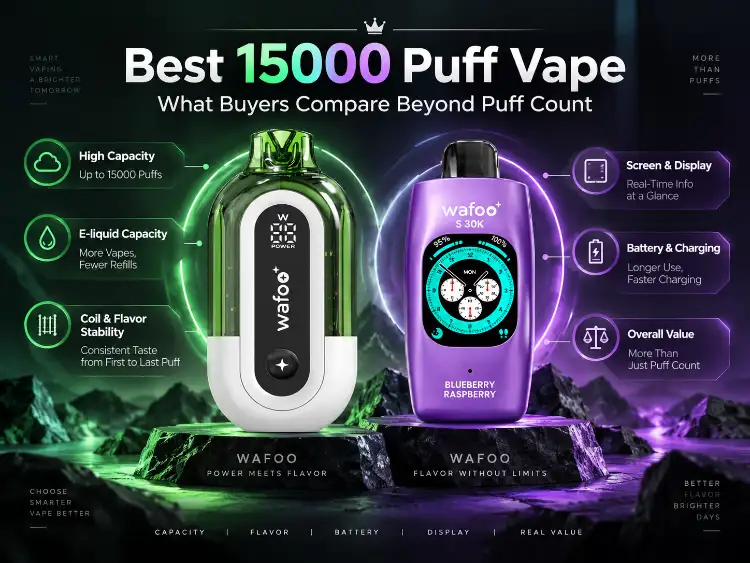
When shoppers search for the best 15000 puff vape, the comparison looks simple: the larger number appears to win. In practice, that headline number describes a test or positioning reference, not a guaranteed number of inhalations for every user. The comparison should cover the device architecture that supports the claim, including liquid capacity, battery and charging design, coil format, airflow and the consistency of the experience over time.
How long does a 1500 puff vape last in real use, and does the experience stay predictable after the first few sessions? That is the question distributors, importers and product teams should answer. A sample review should show how the device behaves when the battery is partly depleted, when the liquid level changes and when the coil has already been used. Those observations are more useful than ranking products by puff count alone.
What Does a 15000 Puff Rating Actually Mean?
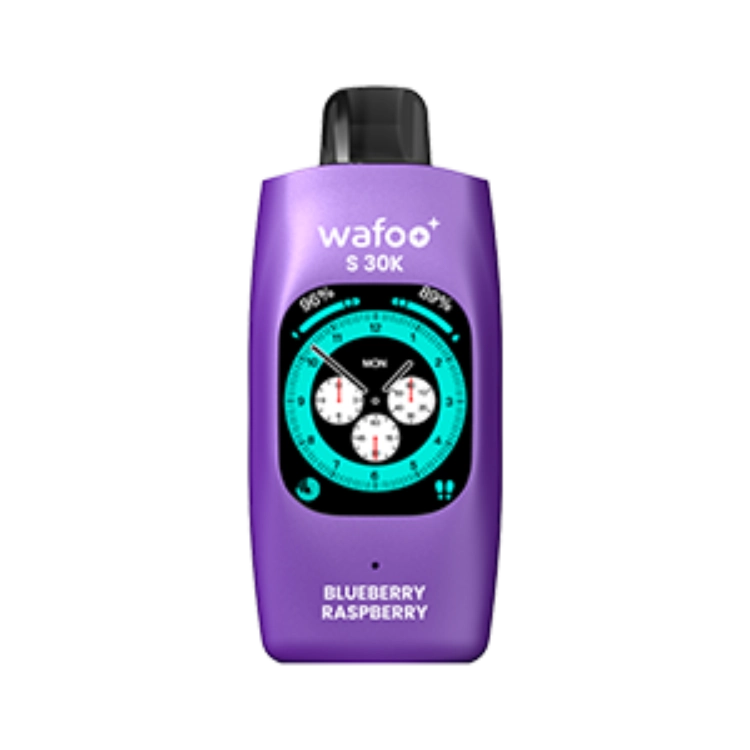
A 15000 Puff Disposable Vape rating is typically derived from a controlled test condition or a calculated estimate. Puff duration, airflow, power, liquid consumption and individual inhaling behavior all affect how quickly the available liquid and battery are used. Two users can therefore reach the end of the same device at different times.
Why the Test Method Matters
For any 15000 Puff Disposable Vape, the comparison is more credible when the manufacturer describes the method behind the rating. The buyer should ask whether the figure came from a laboratory protocol, an estimated liquid-consumption calculation or a marketing convention. The answer affects how the number can be compared with another device.
The rating can still be useful for product positioning. It becomes misleading only when treated as a universal runtime promise without considering the conditions behind it.
Why Real Use Can Differ
A longer or stronger puff consumes more aerosol and generally more liquid. Higher power can change the amount of vapor produced per activation. Airflow and coil design also influence how efficiently the liquid reaches the heating element. The same 15000 puff device can therefore feel very different across users and settings.
For buyers, the practical target is not an exact match with the label. It is a stable experience during the intended period of use, followed by a clear end-of-life signal rather than inconsistent performance.
How to Compare High-Capacity Vape Devices
The highest puff vape is not automatically the most useful one. The strongest comparison combines capacity, power and physical usability. A device with a large liquid reservoir still needs a battery strategy that can support repeated sessions, and a large body still needs to fit the target sales channel and user preference.
Liquid Capacity and Recharge Design
When asking what vape has the most puffs, check how the liquid is stored and whether the battery is rechargeable. High-capacity formats may use a rechargeable battery so the available liquid can be consumed over more than one session. The charging port, battery condition and protection behavior should be documented for the exact model.
Do not transfer a charging specification from one model to another. High-capacity devices can use different batteries, circuits and power-management designs.
Coil, Airflow and Flavor Stability
How long does a 1500 puff vape last under repeat use? Such a device is used for longer than a small disposable, so coil stability becomes more important. The review should compare the heating structure, liquid path and airflow design. The goal is not simply a large first puff; it is a repeatable draw after many activations.
Flavor performance should be checked at the beginning, middle and later stages of use. A sample that changes sharply after the first session may indicate that the liquid supply, coil or power strategy does not match the intended product promise.
What Should Buyers Verify in a Sample?
A question such as what vape has the most puffs should be answered by a structured sample review. Record the battery state, charging behavior, number of activations, airflow setting and visible liquid level. Then compare the observations against the product specification and the intended market.
Battery and Charging Checks
For the highest puff vape candidates, confirm that the device charges as described, that the indicator or display behaves consistently, and that performance remains stable across charging cycles. Record the exact charging guidance from the manufacturer. Do not assume that a larger device can use a higher-power charger or that every rechargeable disposable follows the same procedure.
Liquid, Coil and End-of-Life Checks
Observe whether flavor and vapor remain consistent as the liquid is consumed. Check for leakage, gurgling or a dry note. The end of the device’s useful life should be recognizable through the display, vapor behavior or liquid condition, not discovered only after an unpleasant puff.
These checks should be repeated across more than one sample before a bulk decision. Variation between units is as important as the performance of the best sample.
Where Does WAFOO 16000 Fit?
Wafoo’s current product family includes the
WAFOO 16000, a high-capacity format in the same broad buyer conversation as 15000 puff devices. The exact specifications belong to that product page and should be confirmed before using the device in a quotation, listing or comparison.
The official WAFOO 16000 product page lists up to 16,000 puffs, a 16ml e-liquid capacity, a 600mAh rechargeable battery, USB-C charging, a 1.2Ω mesh coil, a digital screen and nine flavors. Those values show the level of specification detail a high-capacity product brief can contain. They are not universal specifications for every 15000 puff device. A 15000 puff search does not require the selected product to use that exact number. The reader is evaluating a class of high-capacity devices. The appropriate Wafoo bridge is to confirm the exact model, published specification and sample requirement rather than imply that every high-capacity device shares the same design.
The sample should also be reviewed for packaging, activation method and the clarity of end-of-life indicators. These details affect returns, user support and the accuracy of product descriptions. When a buyer compares several 15000-puff-class products, use one common test sheet so the differences reflect the devices rather than different review methods.
For a broader view of current formats, review the Wafoo product portfolio. If the project requires a specific capacity, flavor or packaging direction, use the Wafoo contact page to discuss samples and the exact product brief.
Conclusion
Puff count is a useful starting point, not the final measure of a high-capacity vape. A practical check should compare the test basis, liquid and battery design, coil and airflow behavior, charging requirements and consistency over time. A credible sample review should show how the device performs beyond the first impression. Keep the review records with the quotation so an approved specification can be compared with the production batch later. If the label, performance or end-of-life signal changes, the buyer should treat it as a new product decision rather than assuming equivalence.
A best 15000 puff vape shortlist should define the product class, then verify the exact model and specification before ordering. The approved sample should be the reference for every later batch and quotation. That approach protects both product positioning and the user experience.
FAQs
Q1: Does a 15000 puff vape always last for 15000 puffs?
A1: No. The figure depends on test conditions and actual use. Puff duration, power, airflow and liquid consumption can change how long the device lasts.
Q2: What should I check first when comparing high-puff vapes?
A2: Check the test method, liquid capacity, battery and charging design, coil and airflow system, and the consistency of flavor and vapor across repeated use.
Q3: Can I compare two 15000 puff devices by capacity alone?
A3: No. Two devices with the same label can use different batteries, liquid systems, coils and power strategies. Compare the exact specifications and sample behavior.