A thick 70/30 liquid can outrun a pod designed for thinner juice. Flavor turns flat. The draw starts to feel dry. Switch to a PG-heavy blend in the same pod and the liquid arrives faster, but the vapor becomes lighter. Nothing about the device changed. The liquid did.
PG vs VG vape behavior is therefore a hardware question as much as a recipe question. PG and VG dissolve flavor and nicotine, reach the wick and vaporize at the coil. Viscosity changes how quickly that delivery happens. A workable ratio keeps the wick wet under the pod’s airflow and power.
What Do PG and VG Actually Do?
Both dissolve the flavor and nicotine system and both vaporize. Their flow behavior differs before the coil ever gets hot.
Lower-viscosity PG reaches cotton, ceramic and mesh wicks faster. Higher-viscosity VG resists flow. It adds density and smoothness while increasing wick demand.
Ignore the hardware and the ratio loses its meaning. The same 70/30 blend can feel rich in one tank and weak in another. Liquid flow reaches the coil; the printed percentage does not.
Why PG Matters for Flavor and Throat Feel
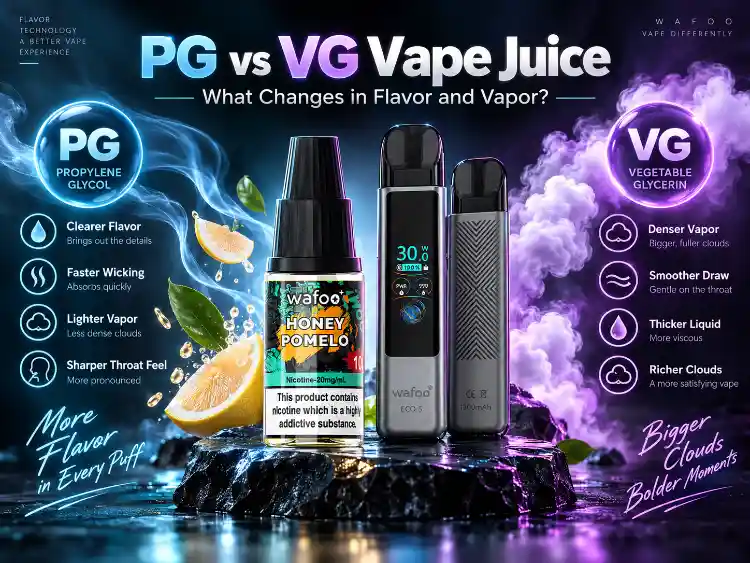
PG reaches the coil quickly. In a small pod or low-power device, that speed can keep flavor notes separated and give the draw a firmer edge. Fruit, mint and beverage profiles often feel more defined when the liquid reaches the coil without delay.
Less visible vapor comes with the faster PG flow. A PG-leaning recipe usually makes less cloud than a VG-heavy one. Less cloud is not the same as weaker flavor. It simply shifts the experience toward response and throat feel rather than density.
Why VG Changes Vapor Density and Smoothness
VG raises viscosity and produces a fuller aerosol. A softer inhale and larger cloud are common with more VG. Mouthfeel-focused users often choose a higher VG share.
More liquid volume does not guarantee consistent wicking. When the wick falls behind the thicker liquid, flavor narrows and a dry note can appear. High-VG liquid needs a wicking path built for its viscosity. The formulation and the pod must be approved together.
How Does the PG/VG Ratio Change Daily Use?
On a PG vs VG vape juice label, 70/30 means 70 percent VG and 30 percent PG. A 60/40 blend moves the balance toward PG. The numbers are simple. Their effect is not.
Flavor, Vapor and Throat Feel
More PG usually means faster flavor response and a firmer throat feel. More VG usually means denser vapor and a rounder mouthfeel. The shift is gradual, and coil condition can mask it.
Keep every other variable steady during a VG vs PG comparison. Use the same pod, coil, wattage and puff length. If airflow, nicotine format or coil age changes at the same time, the ratio effect becomes impossible to isolate.
Wicking Speed and Device Fit
Many high-VG problems begin at the wick. Cotton, ceramic and mesh structures do not move liquid in the same way. A pod that works with 60/40 may run dry with 70/30 at the same power.
Treat every VG vs PG vape decision as a hardware approval. Ask the device supplier for the intended liquid format before approving a formula. Wafoo’s 10ml E-Liquid range includes Blue Raspberry Grape, Strawberry Jam and Peach Juice. Flavor names identify the profile rather than a universal ratio. The approved ratio remains specific to the exact SKU. See the Wafoo e-liquid product family.
Is 70 VG and 30 PG Good?
For many compact pods, is 70 VG and 30 PG good enough? Only if the wick keeps up with the thicker liquid. A 70/30 can be a strong choice for a device with a generous wick, open airflow and enough power to maintain heat. It gives the user the denser, smoother profile that high-VG liquids are known for.
When a buyer asks, “Is 70 VG and 30 PG good?”, the honest answer depends on the wick. It can also fail in a compact pod. The wick may perform at first, then fall behind as the liquid level drops. Check the blend from first puff to final fill, not only at the start. Watch for flavor fade, dry notes and changes near the end of the fill.
Is 60/40 VG PG Good?
60/40 often lands between the two extremes. Flavor arrives faster than in a high-VG blend, while the vapor stays fuller than in a strongly PG-leaning liquid. Small pods and balanced flavor profiles frequently handle this direction well.
Device fit still decides. A 60/40 formula may feel thin in a high-power setup or ideal in a low-wattage pod. Record the resistance, wattage, airflow and flavor code alongside the ratio so the next batch can reproduce the result.
What Should Buyers Verify Before Choosing a Ratio?
Begin with the device’s liquid guidance. Review the formula, not only the two headline numbers. PG and VG source, flavor concentrate, nicotine format, filling temperature and wick geometry can all change how the liquid behaves.
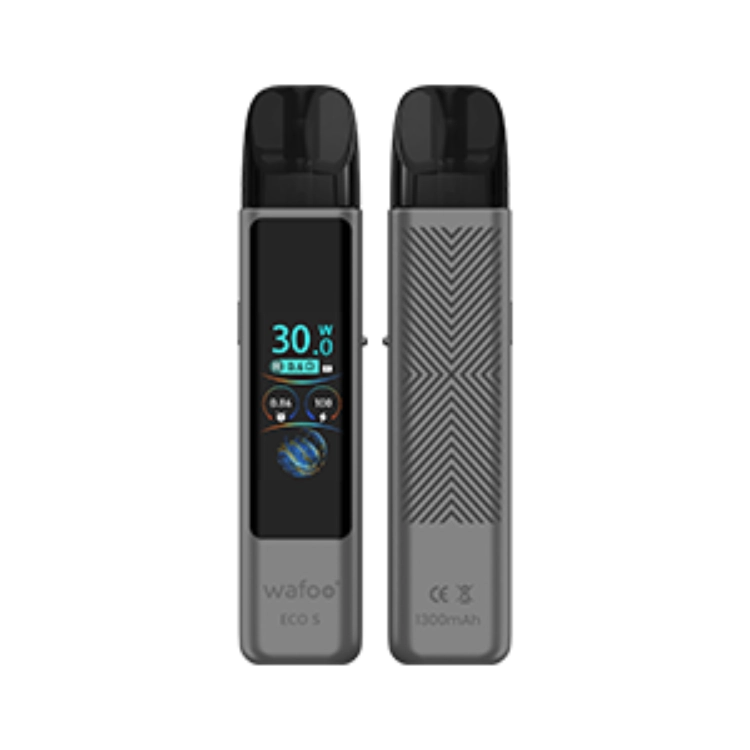
Record a controlled comparison before changing production. Prepare matched samples with the same flavor concentrate and nicotine format at the two ratios under review. Label the pod, coil and fill date so the observations can be traced back to the exact material lot. Fill a fresh pod and let the wick saturate. Record flavor at the first puff, halfway through the pod and near the end. Look for leakage, spit-back, gurgling and dryness. The Wafoo ECO S illustrates why device context matters: its official product page lists a 2.0ml refillable pod, a 1300mAh battery and a 15–30W adjustable range. Those specifications do not make one PG/VG ratio universally correct. They show why the formula must be tested against the exact pod and power range. If the product uses replaceable coils, repeat the test across more than one coil lot.
A multi-market program should keep the PG vs VG vape juice ratio, flavor code, nicotine format and target device in one specification. A shared flavor name does not prove that two device families use the same liquid. The Wafoo product portfolio shows current formats; confirm the exact sample through the Wafoo contact page.
Conclusion
Neither material is a rival to the other. They are two materials with different flow and vapor behavior. PG usually gives faster wicking, clearer flavor edges and a firmer throat feel. Higher VG brings denser vapor, a softer inhale and more wick demand.
Begin with the coil and wick, then test the PG vs VG vape formula. Either a 60/40 or 70/30 VG vs PG vape blend works only when the device maintains flavor and flow.
FAQs
Q1: Does higher VG always mean better flavor?
A1: No. VG changes density and smoothness; flavor still depends on the concentrate, wick, coil and power. High VG can lose definition when the wick runs behind.
Q2: Can I use a high-VG liquid in any pod?
A2: Not automatically. Narrow wicking channels may not move thick liquid fast enough. Follow the device guidance and test the exact pod or coil before bulk approval.
Q3: Is 60/40 or 70/30 better?
A3: The device decides. Fast wicking and balanced flavor may favor a 60/40 blend. Fuller vapor may suit a 70/30 blend when the coil, wick and airflow can support it.