Two devices land on your sampling table, twins on paper: same tank capacity, same coil, same battery, quoted within pennies. One fires the moment a customer inhales. The other waits for a thumb. The first selling season files its receipts — one SKU hoovers up misfires and dry hits, the other collects dead switches and first-timers convinced the unit is dead. Which pile does your order feed? Most buyers never ask until the returns pallet answers.
Activation method gets treated like a trim option, and frankly it isn’t one. It carries engineering debt and after-sales load, and whoever picks by default rather than by channel pays around month nine.
Two Ways to Start a Puff, Structurally
How Draw Activation Works
Draw-activated hardware turns an inhale into a firing decision using one of two components. Up market, a MEMS airflow sensor — a close cousin of a microphone — reads pressure through a protected port. Down market, a pressure switch clicked to a threshold does the job, and much of the impulse shelf lives there. The choreography matches either way: lungs pull, the threshold crosses, the board closes the firing circuit, and a safety timer stops it regardless.
The consumer pitch writes itself, which is why you see it everywhere: no button, no lesson, works upside down, works at 2 a.m., works for your aunt. The pitch is also, unusually, completely true.
What the pitch leaves out is where the sensor lives. It sits in the same air channel as the vapor, and therefore in the path of everything the vapor becomes when it cools: a film that collects on the sensor’s face, every day. A draw device stands or falls on plumbing that nobody advertises — channel shape, drain angles, and the air gap between the wet channel and the dry board.
Skip the plumbing and nothing fails at inspection, and that silence is exactly how the trap closes. Week five is when the device confesses: firing without a mouth on it, firing weakly, or firing only when held tilted over the sink like a ritual.
How Button Activation Works
A button device delegates the decision to a switch — mechanical in most designs, capacitive when someone got ambitious — and its firmware is suspicious until proven deliberate. The sequence goes: press, hold past the debounce window, fire. The firing cap is commonly eight seconds, reset with a fresh press, and the industry agrees on almost nothing else this consistently.
Because intent now gates the circuit, the design freedom that unlocks is genuine. The air channel gets to be only an air channel, with the whole channel budget spent on vapor: a looser draw, a quieter draw, a warmer draw, and no risk that a customer mouthing the mouthpiece like a harmonica is accidentally ordering a firing.
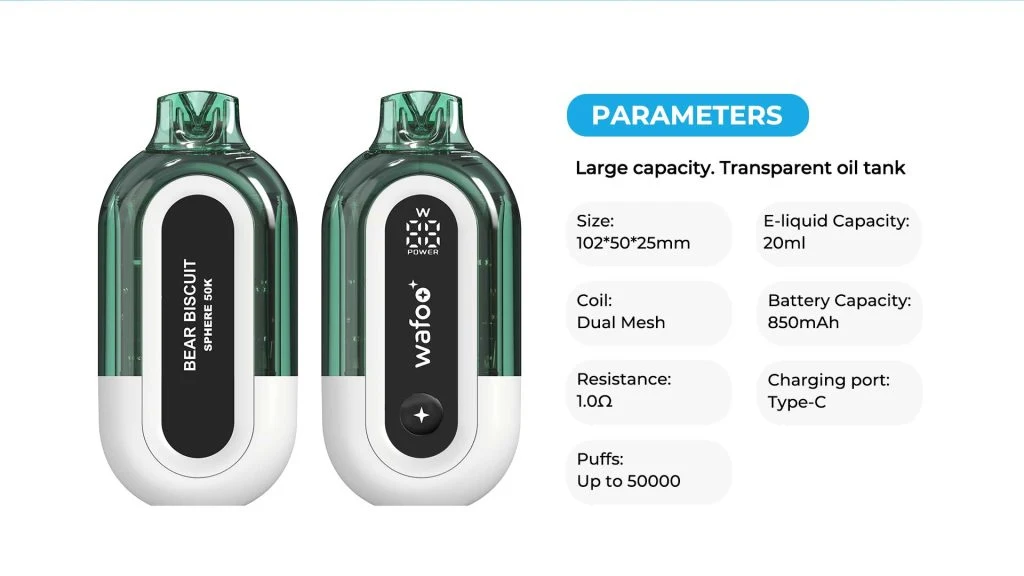
The bill for that freedom lands in three places. First, moving parts die on calendars, so the switch’s rated lifetime — often quoted at 100,000 presses — belongs in your purchase documents rather than a sales email, because it decides whether month fourteen resembles month one. Second, every button is a hole punched through the waterproofing; ask how it is gasketed, then ask a second time about the drop test.
Third, humans now need instructions: hold the device down, press with the puff rather than after it, and do not tape the button flat. Every market produces that identical support queue in week one. It costs pennies per box to prevent and staff-hours per thousand units to cure.
Draw vs Button at a Glance
Keep this table beside your quotation when comparing suppliers.
| Dimension | Draw-activated | Button-activated |
| Trigger | MEMS airflow sensor or pressure switch | Mechanical or capacitive switch |
| Firmware gate | Safety timer caps each firing | Debounce window plus an eight-second cap |
| Critical weakness | Condensate film on the sensor | Switch wear and sealing around the button hole |
| Dominant field ticket | Misfire or no-fire (function complaint) | Dead switch or lock confusion (quality complaint) |
| Typical resolution | Clear-and-wait demonstration at the counter | Replacement unit from spares stock |
| Best-fit channel | Unassisted, impulse-led retail | Assisted retail and liability-sensitive markets |
Field Behavior: Where Each Approach Earns and Burns
Temperature, Liquid Viscosity, and False Reads
Cold weather and draw sensors have a complicated relationship, for one main reason: e-liquid thickens in the cold, in transit and in an unheated backroom, and high-VG formulations worst of all. Thick liquid creeps into a cold wick too slowly. The coil runs starved, the first draw feels airy, and the customer concludes the sensor missed the puff even when it fired normally. Cotton wicks make this worse; mesh recovers faster.
The button device dodges the whole false-read problem because its firing decision is electrical and does not care whether liquid reached the coil in time. Neither design fixes the wicking physics underneath. One hides it behind intent; the other needs channel engineering to survive it.
Blockage runs the opposite direction. Flood a draw unit’s coil, or drop debris into its channel, and airflow under-reads. The device simply refuses to fire, which is the classic “my device stopped working” ticket, resolved at the counter once someone clears the channel. Flood a button device and you get a gurgling, spitting puff — but at least it fires, so the complaint arrives dressed as a quality problem rather than a function problem.
Your support desk should notice the difference, because the two ticket types consume different budgets. Function tickets eat staff time on demonstrations. Quality tickets eat replacement stock.
Misfires, Locks, and the Accidental Puff
Every wholesaler who has stocked draw activation at scale has heard the pocket-fire story. A pressure change or a piece of lint triggers the sensor, and the device fires away inside a jacket pocket. Modern firmware mitigations, short-circuit timing rules, and lock clicks have reduced the incidents. The catch: the mitigation is itself a feature users discover late, and a click-to-lock mechanism adds a moving part of its own to evaluate.
Button devices answer the story structurally: a lock is native behavior in a product where firing already requires a held press. Where product-liability exposure runs strict, that structural difference is a procurement argument, not a trivia point. The reverse exposure exists too. Button products collect complaints from users who found the lock and cannot find the unlock sequence, and that one costs only an insert card in the box to solve.
What Sells Better, What Costs Less: Two Honest Patterns
Aggregate complaint economics favor draw-activation on volume and button-activation on severity. Per thousand units, draw units generate more tickets, because their failure surface — the sensing channel — interacts with every human usage pattern imaginable. Most of those tickets, though, resolve at the counter with a clear-and-wait demonstration that costs no stock. Button units generate fewer tickets because there is less to misread, yet a higher share end in replacement, since switch failures and firmware lockups cannot be demonstrated away.
Run that logic out and the retail consequence becomes a staffing decision plus a stock decision. Draw-heavy programs need counter scripts and trained staff. Button-heavy programs need a deeper spares allowance. Pricing both types off one averaged returns rate hides exactly the difference a distributor ends up paying for.
Chain-Vaping, Sessions, and the Firmware Behind Them
A button device knows exactly how long its button has been held, which means its firmware knows the session: puff length, the gaps between puffs, and total draw time per cartridge. Telemetry like this is a supplier’s raw material for reliability work, and the cutoff timer pulls double duty by protecting the coil and the cell at once, since long continuous firing events are what heat a battery hardest.
Draw devices know far less. The sensor reports puffs, never deliberateness, so a pocket fire and a genuine puff log out nearly identically. Ask your supplier what the hardware can tell the factory, before failure and after. The answer separates engineering-led builders from catalog-led ones, and it often reveals which product generation you are really ordering.
Two Generations of Sensor, and Why Board Layout Settles It
Draw hardware has improved along one track only: shrink the sensing element, then get it off the wettest real estate in the channel. Early pressure switches sat under the mouthpiece — dead center in the condensation zone, which is why that first generation failed damp. Current designs seal a MEMS sensor behind a labyrinth or park it on a board edge, reading pressure through a protected port, with hydrophobic barriers and drainage channels between vapor path and electronics.
Ask which generation of board you are getting, not merely which sensor they buy — the datasheet does not print the layout, and the layout is the product. A good sensor behind a bad labyrinth still drowns. Buttons obey the same logic. The switch itself is commodity; the gasket, the travel before contact, and the board mounting that survives a drop decide whether year-one units still fire in year two of a distribution contract.
The Mouthpiece Is Part of the System
Mouthpiece geometry feeds each activation type differently, and this is where a cosmetic decision becomes a spec question. Draw devices inherit sensitivity from the bore. A narrow bore produces higher air velocity at the sensor for a given inhale effort, which flatters weak users and punishes anyone with a loose seal. Go wide and you get the reverse.
Button devices tolerate a wider spread of geometry because their trigger does not live in the air path, one reason button hardware often feels more forgiving across different users.
The practical rule matters most when tooling changes. When the factory changes mouthpiece tooling between production runs, draw devices get re-verified on the firing threshold, while button devices get re-verified on comfort and draw weight only. A line sheet that never mentions either obligation is a line sheet that will surprise you mid-contract.
Reliability Programs for Wholesale Buyers
What to Ask the Factory About Each Side
Documentation quality predicts field behavior, so make specific requests and judge how specific the answers are. For draw-activated hardware, request the sensor type, the airflow threshold range, and the calibration method used on the production line. Ask how condensate is managed around the sensor face and what the aging test profile is. Draw devices should be tested damp, not dry, and at both ends of the temperature range the destination market sees.
A serious supplier will also share which complaint codes dominate their own return analysis. Wafoo’s published hardware documents this kind of design intent at the spec level — anti-leakage coil structures, defined airflow paths, and screen-monitored battery behavior. The ECO S product page is an example of the documentation standard worth demanding from any supplier whose devices carry your brand.
For button hardware, ask for the switch’s rated lifetime, the debounce and cutoff timing rules, and how the lock logic interacts with charging. Then verify it on samples. Press the switch two thousand times on a teardown unit. Hold the button under the cutoff repeatedly and check thermal behavior. Tape the button deliberately and confirm the firmware’s safety response. These are half-day checks. They answer a season of tickets in advance.
QC Sampling That Actually Predicts Field Failure
Your incoming inspection should stress the activation method, not apply one generic plan to both types.
| Check | Draw units | Button units |
| Stress firing | Sample-fire at cold-soak temperature | Cycle-count samples |
| Worst-case usage | Fire at the low end of plausible inhale force | Measure press force distribution across the batch |
| Flood behavior | Test after the unit has sat deliberately flooded on one side | Inspect the switch seam for sealant coverage under magnification |
| Pass criterion | Count no-fire events per hundred draws, not per unit | Confirm press force stays within spec across the batch |
A device that misses one draw in ten is a returns generator, which is why the count belongs per hundred draws and not per unit. Both types get a drop-test sample and a mouthpiece-removal re-test, because a re-seated mouthpiece shifts airflow geometry for sensors and comfort for buttons, in different ways.
Matching Activation Method to Channel and Market
Channel Logic, Not Fashion
Match activation to how the sale actually happens, not to which mechanism feels modern. Four channel patterns hold consistently.
Convenience-led channels — gas counters, tourist-facing stores — sell draw-activation well. The purchase is impulse, and a device needing no explanation survives that.
Assisted channels — specialty stores with staff who demo — support button devices better. The learning moment is handled at the counter, and the button’s advantages land with the customer: intentional firing, lock security, chain-vaping control.
Starter-kit programs skew draw, the same reason they skew prefilled: the first hour belongs to the product alone.
Replacement and upgrade purchases skew button, because that buyer already knows what they want.
Regulatory and Regional Sensitivities
Line sheets undersell this, but regulators have opinions about activation methods. The anxiety is specific: child-resistance and accidental firing. Button hardware answers that anxiety with almost no storytelling, which is its quiet advantage. A press is deliberate by construction, and the lock comes free with the design. Draw hardware has to build the same reassurance from firmware behavior and packaging evidence, which means more paper for the same promise.
Add the flavor and nicotine rules that change regionally faster than hardware programs can re-plan, and the planning rule writes itself: the activation decision is the stable part of your file, and the regulatory layer is not. Keep documentation a regulator could read cold, in either method’s case, with nobody standing there to translate.
For mixed-territory orders, one structural trick earns its keep. Assign draw SKUs to the open markets and button SKUs to the scrutinizing ones, instead of blending one method everywhere. A compliance wildcard then collapses into two families, each answering to one readable file.
The Mixed-Lineup Answer
Most distributors resolve the draw-versus-button question by refusing to choose, and the mixed lineup is the honest version of that instinct. Stock one draw hero for the impulse channel and one button platform for the assisted counter, with its second-SKU documentation living on the Pod-System range pages. Both cost curves are now covered, and nothing rides on one method’s luck.
The arithmetic underneath decides it. The two failure classes cost money in different places — counter time versus spare stock — and neither flood drowns the other.
Once the lineup exists, factory conversations harden fast: sensor part numbers and switch ratings, aging-test profiles run damp and cold-soaked, lock logic and cutoff behavior as the firmware actually ships it rather than as marketed, and insert-card copy in the destination language.
One extra note for impulse channels: the disposable shelf is where draw volume concentrates. Read how a serious maker lays its Einweg-E-Zigaretten-Leitungen out on a spec sheet — it is a free template for a coherent impulse range. The equivalent conversation on the Wafoo side runs through the contact desk, though the template travels; take it anywhere.
Before discussing price with any manufacturer, ask for failure-code statistics by activation method, then file both answers together. The pair is the negotiation.
FAQ (häufig gestellte Fragen)
Q1: Which is better to wholesale, draw-activated or button-activated vapes?
Globally? Neither. In unassisted, impulse-led channels draw hardware wins because the counter costs no explanation; the button generates fewer misfire and accidental-activation tickets, the profile assisted retail and liability-sensitive markets want. The justifiable program stocks a hero SKU of each method rather than marrying one mechanism per market — the hedge is the answer.
Q2: Why do draw-activated devices fail more often in cold weather?
Because cold thickens e-liquid — high-VG formulations worst of all — and a cold wick cannot drink fast enough. The coil starves on the first draw, yet the airflow sensor reads a normal-looking puff, so the customer tastes air and blames the sensor. Swollen cotton and blocked channels deepen the under-reading. Cold-soak incoming samples before the season starts; that step predicts most of the ticket volume.
Q3: Are button-activated vapes harder for new users?
Slightly — and predictably. A new user must press and hold while inhaling rather than simply puffing, and week one reliably produces the owner who found the lock but never the unlock sequence. The fix is packaging, not hardware: an illustrated firing-and-lock card in the box converts most of those calls into zero-cost self-service, and its absence converts them into staff-hours.
Q4: What factory documents should I request before ordering either type?
It depends which side of the order you are on. Draw units: sensor type, airflow threshold range, line calibration method, damp and temperature aging-test results. Button units: the switch’s rated lifetime, the cutoff and lock logic. For either, one document outranks the rest — the factory’s own return-reason statistics by failure code. Ask before price.