
Die Beschwerde beginnt meist mit einem kleinen feuchten Fleck, nicht mit einem gravierenden Ausfall. Der Nutzer befüllt den Pod, steckt das Gerät in die Tasche und bemerkt dann Flüssigkeit um das Mundstück oder die Basis. Die erste Frage lautet fast immer: Warum läuft meine E-Zigarette aus?Das Gerät kann aber auch völlig intakt sein.
Bevor Sie eine Entscheidung treffen, achten Sie auf den Flüssigkeitsstand. Eine dicke Flüssigkeitsschicht um den Einfüllstutzen deutet auf die eine Möglichkeit hin. Ein dünner Film im Mundstück deutet auf die andere hin. Ein feuchter, blubbernder Zug nach dem Nachfüllen deutet auf die Verdampferkammer hin. Diese Details mögen unbedeutend erscheinen, verhindern aber, dass ein Händler einwandfreie Pods fälschlicherweise austauscht.
Für den Verkauf oder den Kundendienst eines Händlers ist eine kurze, zweiminütige Überprüfung effektiver als eine lange Erklärung. Nehmen Sie die Kapsel heraus. Wischen Sie die Unterseite ab. Überprüfen Sie den Einfüllstutzen. Fragen Sie, ob die Kapsel direkt nach dem Befüllen seitlich transportiert wurde. Machen Sie dann einen vorsichtigen Testzug. Mit dieser Vorgehensweise lassen sich viele Probleme mit auslaufenden E-Zigaretten beheben, bevor es zu Rücksendungen kommt.
Beginnen Sie mit der feuchten Stelle
Bei einem echten Leck sammelt sich dickflüssigeres E-Liquid an einer Naht, der Einfüllöffnung oder dem Pod-Boden. Es fühlt sich leicht ölig an und nimmt den Geschmacksgeruch deutlich wahr. Kondenswasser ist leichter. Es sammelt sich dort, wo warmer Dampf abkühlt, üblicherweise im Mundstück oder im oberen Luftkanal, und kann abgewischt werden, ohne sofort wiederzukommen.
Der dritte Fall ist der, den man hört, bevor man ihn sieht. Blubbernde Geräusche nach dem Nachfüllen bedeuten oft, dass zu viel Liquid in den Bereich der Heizspule gelangt ist. Der Zugwiderstand fühlt sich feucht oder blockiert an, und der Dampf kann für einige Züge schwach sein. Das ist etwas anderes als ein Pod, der durch eine beschädigte Dichtung ausläuft.
Ein kurzer Blick auf das Tuch hilft. Wischen Sie Mundstück und Basis ab, warten Sie eine Minute und beobachten Sie, wo erneut Flüssigkeit austritt. Wenn dieselbe Stelle feucht wird, überprüfen Sie den Pod. Ist nur das Mundstück feucht, handelt es sich wahrscheinlich um Kondenswasser. Bilden sich beim nächsten Zug Blasen, ist die Coil wahrscheinlich überflutet. Machen Sie vor dem Abwischen ein Foto, falls der Support einen Nachweis benötigt.
Der Nachfüllfehler, der nicht wie einer aussieht
Ein Überfüllen wird leicht übersehen, da sich der Pod möglicherweise noch normal schließt. Das Problem ist der fehlende Luftraum. Da sich kein Druck ausgleichen kann, kann Flüssigkeit in Richtung des Kamins oder des Einfüllbereichs fließen, sobald sich das Gerät in der Hand oder Hosentasche erwärmt.
Auch der Einfüllstopfen ist wichtig. Er kann geschlossen aussehen, obwohl eine Kante nicht plan aufliegt. Ein kurzer Nachfüll- und Ansauganleitung ist hier nützlich, weil das Personal die genaue Bewegung vormachen kann: langsam befüllen, einen kleinen Luftspalt lassen, den Verschluss flachdrücken und dann die Kapsel vor dem ersten richtigen Zug aufrecht hinstellen.
Auch der Druck in der Flasche kann Probleme verursachen. Wird eine weiche E-Liquid-Flasche zu stark zusammengedrückt, kann die Flüssigkeit in den falschen Kanal gelangen. Der Benutzer denkt, der Tank sei voll. Das Pod-System hingegen interpretiert dies fälschlicherweise als Lufteinschluss. Es entsteht ein Gluckergeräusch, und das Gerät wird dafür verantwortlich gemacht.
Starkes Ziehen kann eine Zündspule schnell überfluten
Ein nachfüllbarer Pod ist kein Strohhalm. Kräftige, wiederholte Züge können mehr Flüssigkeit in den Verdampfungsbereich befördern, als das Gerät verdampfen kann. Deshalb kann es vorkommen, dass ein Benutzer nach drei oder vier kräftigen Zügen trotz sorgfältigem Nachfüllen ein Knacken hört.
Eine überflutete Verdampferspule bedeutet nicht zwangsläufig, dass der Pod leer ist. Stellen Sie das Gerät aufrecht hin, wischen Sie das Mundstück ab und ziehen Sie kurzzeitig langsam. Verschwindet der Geschmack und das Geräusch, war die Spule vorübergehend überlastet. Tritt das Geräusch nach jedem Nachfüllen wieder auf, überprüfen Sie bitte den Füllstand, die Wahl des Liquids und Ihre Luftzufuhr.
Hier kommt es auch auf die richtige Formulierung an. „Ziehen Sie nicht zu stark“ klingt wie eine Warnung. „Geben Sie dem Docht Zeit und vermeiden Sie es, Flüssigkeit durch die Heizspirale zu pressen“ klingt hingegen eher wie ein hilfreicher Tipp. Kunden reagieren auf die zweite Formulierung positiver.
Dünnflüssige Flüssigkeit, warme Bereiche und Luftzirkulation erhöhen den Druck
Eine dünnflüssige Flüssigkeit fließt schnell. Eine warme Luftkammer beschleunigt diesen Prozess. Ein fester Zug kann die Flüssigkeit zur Heizspule ziehen. Keiner dieser Faktoren allein beweist einen defekten Pod, aber zusammen führen sie häufig zu Auslaufen oder Blubbern des Dampfes. Ein praktischer Leitfaden zum PG/VG-Verhältnis Hilft dem Personal zu erklären, warum sich eine Flasche anders verhält als eine andere.
Der Luftstrom verändert den Druck im Pod. Eine sehr restriktive Einstellung kann stärkere Züge begünstigen, eine weite Einstellung längere. Beides kann dazu führen, dass beim Nachfüllen der Verdampferspule das Liquid überläuft, wenn es dünnflüssig ist oder der Pod erst kürzlich befüllt wurde.
Die Aufbewahrung ist das A und O. Ein frisch befüllter Behälter, der seitlich in einer Tasche liegt, gegen die Schlüssel gedrückt und dann während der Fahrt erwärmt wird, hat eine harte erste Stunde hinter sich. Selbst ein durchdachtes Design kann nicht jede Aufbewahrungsgewohnheit unproblematisch machen.
Warum ECO S am Schalter leichter zu erklären ist
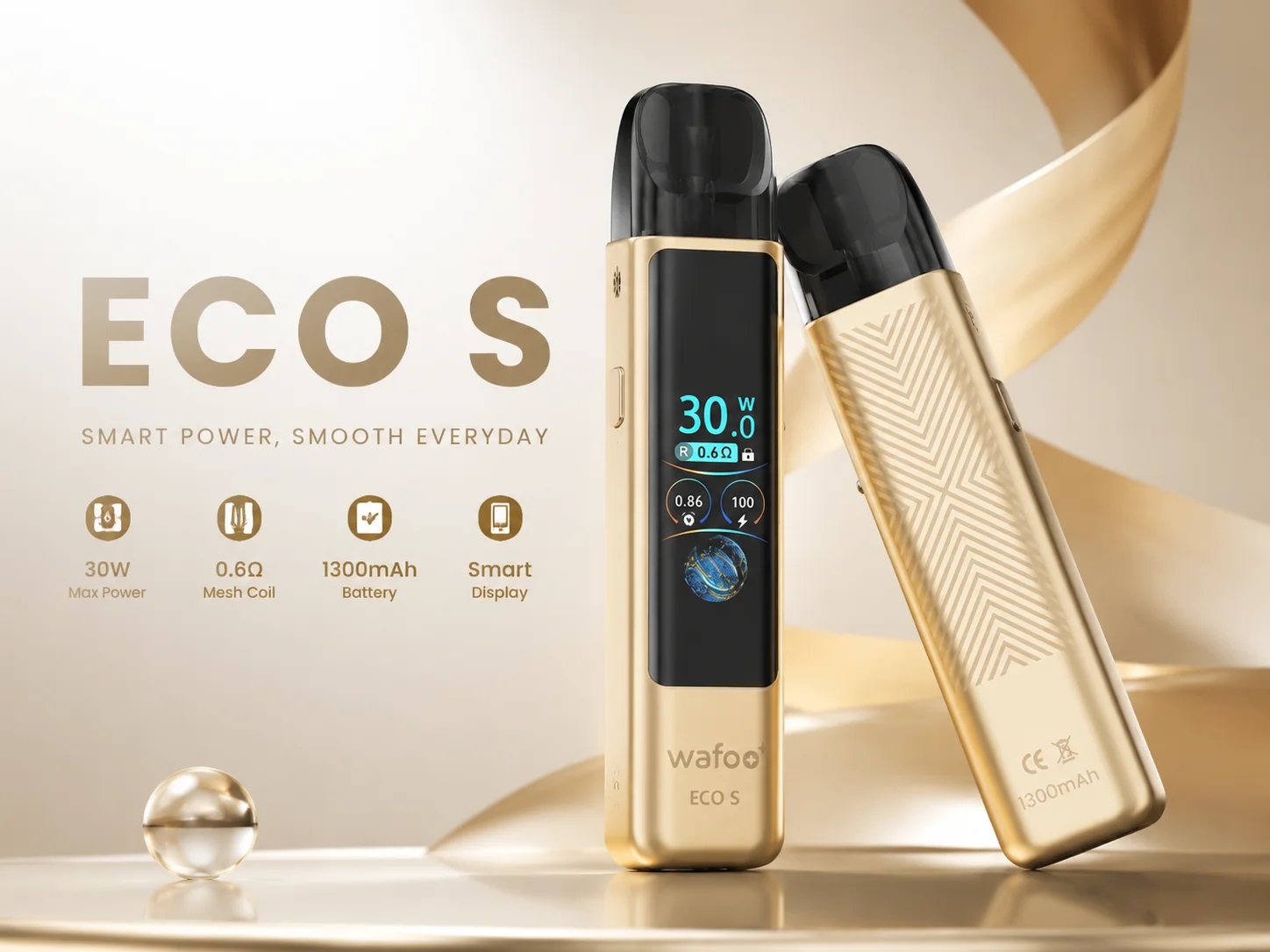
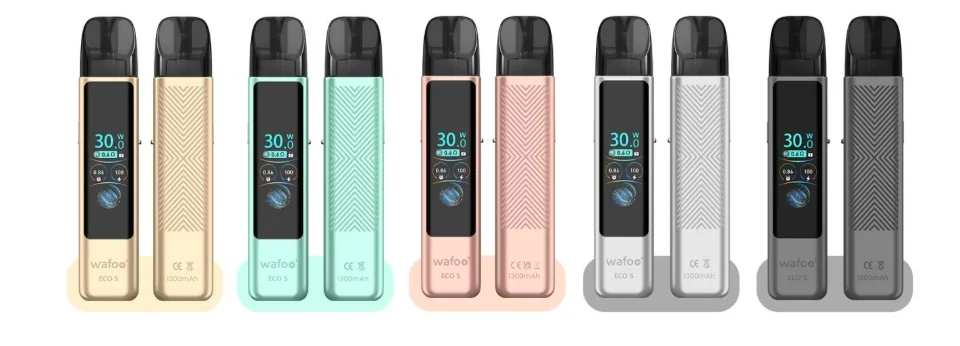
ECO S Pod-Kit Das Gerät bietet dem Personal sichtbare Anhaltspunkte für das Gespräch: einen transparenten 2,0-ml-Pod, seitliches Befüllsystem, einen 1300-mAh-Akku, 15–30 W Ausgangsleistung, USB-C-Ladeanschluss und einstellbare Luftzufuhr. Der Nutzen liegt nicht in der Garantie, dass kein Pod ausläuft, sondern darin, dass der Kunde die Prüfpunkte einsehen kann.
Ein transparenter Tank zeigt an, ob der Füllstand niedrig oder zu hoch ist oder ob die Flüssigkeit nach schrägem Aufsetzen vom Docht ferngehalten wird. Die seitliche Befüllöffnung dient dem Personal als Orientierungspunkt, um die korrekte Position des Verschlusses zu demonstrieren. Die einstellbare Luftzufuhr ermöglicht es, die Zugstärke präzise zu beschreiben.
Für Geschäfte, die führen Wafoo Vape-Produkte Eine kleine Karte neben der ECO S enthält die wichtigsten Hinweise: Nicht bis zum Rand füllen, den Verschluss flach schließen, nach dem ersten Befüllen warten, die Kapsel kurz aufrecht halten, Kondenswasser abwischen und langsamer ziehen, wenn es beim Ziehen zu blubbern beginnt.
Dieselbe Karte hilft auch dabei, echte Defekte von Anwendungsproblemen zu unterscheiden. Wenn dieselbe Kapsel nach sorgfältigem Befüllen an derselben Naht ausläuft, sollte sie ausgetauscht werden. Wenn sich die Feuchtigkeit je nach Lagerung, Zugtechnik oder Flüssigkeitsart ändert, sollte zunächst die zugrunde liegende Gewohnheit korrigiert werden.

FAQ (häufig gestellte Fragen)
Frage 1: Warum läuft eine E-Zigarette direkt nach dem Nachfüllen aus?
A1: Die häufigsten Ursachen sind Überfüllung, ein nicht vollständig eingesetzter Einfüllstopfen, Flüssigkeit im Luftkanal oder das seitliche Tragen der Kapsel, bevor sich der Druck ausgeglichen hat. Wischen Sie die Kapsel ab, überprüfen Sie den Einfüllbereich und lassen Sie sie kurz aufrecht stehen.
Frage 2: Ist das Blubbern beim Dampfen ein Anzeichen für ein Leck?
A2: Nicht immer. Blubbern im Dampfgerät bedeutet in der Regel, dass sich überschüssige Flüssigkeit um die Heizspule oder im Luftstromkanal befindet. Auslaufende Pods hingegen bedeuten, dass Flüssigkeit aus dem Tank, der Naht, dem Boden oder der Einfüllöffnung austritt. Geräusch und Feuchtigkeitsfleck geben unterschiedliche Hinweise.
Frage 3: Wann sollte eine Kapsel ausgetauscht werden?
A3: Tauschen Sie die Kapsel aus, wenn sie nach sorgfältigem Befüllen an derselben Naht ausläuft, nach der Reinigung feucht bleibt, nach wiederholtem Befüllen verbrannt schmeckt oder sichtbare Beschädigungen der Versiegelung aufweist. Sollte sich das Problem je nach Flüssigkeit, Lagerung oder Zugtechnik ändern, überprüfen Sie diese Gewohnheiten zuerst.
Für ECO S-Produktdatenblätter, Nachfüllhinweise oder Handelsunterstützungsmaterialien können Teams Kontaktieren Sie das Wafoo-Team mit dem Produktmodell und dem anvisierten Vertriebskanal.