Sous les projecteurs d'un magasin, une cigarette électronique scellée peut paraître convaincante. La boîte est brillante, le nom de la saveur est familier et l'appareil peut même arborer un compteur de bouffées. Pourtant, cela ne garantit pas son authenticité. Avant même la première bouffée, quelques vérifications simples permettent d'éviter une batterie défectueuse, une cartouche au goût étrange ou un produit dont l'origine est introuvable pour la marque. Voici comment repérer une contrefaçon sans transformer votre magasin en laboratoire.
Une cigarette électronique contrefaite attire souvent l'attention en imitant les éléments les plus faciles : couleur, forme, grands chiffres et étiquette de saveur. C'est généralement sur les détails plus complexes que la contrefaçon se fait sentir. Les codes d'emballage, les informations sur le lot, les avertissements, le comportement de charge, la qualité de l'affichage et les canaux d'assistance sont autant d'indices révélateurs. Pour les détaillants et les distributeurs, ces indices sont cruciaux avant même la mise en rayon. Pour les consommateurs adultes, ils sont essentiels avant même que l'appareil ne soit utilisé.
Le boîtier donne généralement le premier avertissement.
Commencez par examiner l'emballage, car c'est la première chose qu'un vendeur, un préparateur de commandes ou un client peut comparer sans même ouvrir le produit. Un emballage authentique doit être cohérent avec l'image de marque et le reste de la boîte. Vérifiez le nom du modèle, le nombre de bouffées, le taux de nicotine, le nom de l'arôme, la date de péremption ou le numéro de lot, les avertissements sanitaires, le code-barres et la zone à gratter. Une faute d'orthographe isolée n'est pas toujours une preuve, mais plusieurs petites erreurs sur la même boîte méritent qu'on s'y attarde.
Les contrefacteurs ont la fâcheuse habitude de prendre des raccourcis ostentatoires. Ils peuvent imprimer un nom de saveur percutant tout en laissant les informations techniques vagues ou peu claires. Ils peuvent copier une palette de couleurs populaire, mais utiliser une encre terne, un film plastique irrégulier ou un sceau qui se soulève trop facilement. Certaines cigarettes électroniques contrefaites mélangent également des détails de deux modèles différents : par exemple, une boîte peut afficher une résistance mesh alors que l’appareil à l’intérieur ne présente ni flux d’air ni affichage correspondants.
L'étiquette à code à gratter mérite une attention particulière. Elle ne doit pas donner l'impression d'avoir été collée à la hâte sur un film abîmé. Le revêtement doit se gratter proprement et le code doit être lisible après un seul passage attentif. Si un carton contient plusieurs boîtes avec le même code, ou si le code semble imprimé directement sur le visuel au lieu d'être protégé par un revêtement, considérez le stock comme douteux jusqu'à confirmation de la marque.

Vérifiez le code avant que l'appareil ne gagne votre confiance.
L'habitude la plus simple et la plus utile à prendre est de vérifier le code avant de faire confiance à l'appareil. Wafoo offre à ses clients une vérification du produit Cette page explique précisément cette étape. Elle indique que le code de vérification d'authenticité se trouve sur une étiquette collée sur l'emballage du produit. Grattez la pellicule pour révéler le code, ou scannez l'étiquette avec votre téléphone pour afficher le résultat.
Cette petite étape de vérification des produits de vapotage n'est pas superflue. Elle permet de relier l'emballage physique au système de la marque. Un code illisible, un scan qui mène à une page étrange ou un résultat ne correspondant pas à la gamme de produits ne doivent pas être considérés comme un simple problème d'impression. Un magasin devra peut-être contacter le fournisseur, mais la première réponse doit provenir de la voie officielle, et non d'une annonce trouvée sur une plateforme de vente en ligne.
La vérification du produit est également utile en cas de retour client pour réclamation. Le personnel peut demander la boîte, vérifier l'étiquette et comparer le résultat avec le modèle vendu. Cela permet d'aborder la question de manière plus concrète. Au lieu de discuter du goût, de l'autonomie de la batterie ou du mode de charge, le magasin peut d'abord s'assurer de la traçabilité du produit.
Le prix et le canal de diffusion ne sont qu'une partie de l'histoire.
Le prix seul ne prouve rien, mais un prix bien inférieur aux prix de gros ou de détail habituels doit vous alerter. Les produits authentiques ont un coût réel : cellules de batterie, remplissage d’e-liquide, emballage, tests, expédition, contrôle qualité en magasin et service après-vente. Lorsqu’une offre est trop alléchante, c’est souvent qu’il manque quelque chose. Il peut s’agir d’un stock ancien, d’un réseau de distribution défaillant, d’un réétiquetage non autorisé ou d’une contrefaçon conçue pour être vendue rapidement.
Une cigarette électronique contrefaite arrive souvent par un canal incapable de répondre aux questions les plus élémentaires. De quel lot s'agit-il ? À quelle version commerciale correspond cette étiquette ? Le vendeur peut-il fournir des photos de l'emballage avant le paiement ? Les saveurs sont-elles identiques à celles du catalogue actuel ? Existe-t-il un service client disponible après une première réclamation ? Un distributeur légitime ne répondra peut-être pas à toutes les questions instantanément, mais le processus d'achat ne devrait pas donner l'impression d'être opaque et opaque.
Les magasins peuvent effectuer ce contrôle de manière simple. Il suffit de conserver les factures des fournisseurs, les photos des emballages, les listes de lots et les captures d'écran des contrôles de code. Si un nouveau parfum ou modèle arrive soudainement d'un nouveau fournisseur à un prix bien inférieur, comparez un échantillon non ouvert avec le stock provenant de la filière habituelle. L'objectif n'est pas de refuser toutes les bonnes affaires, mais de repérer celles qui entraînent des retours, de mauvais avis et un rayon rempli de produits que personne ne souhaite défendre.
Vous avez ouvert la boîte ? L’appareil recèle encore des indices.
Il arrive que la boîte soit déjà ouverte lorsqu'un problème survient. L'appareil peut encore fonctionner. Vérifiez l'embout buccal, le flux d'air, le port de charge, l'écran, la sensation des boutons, l'alignement de l'étiquette et le goût des premières bouffées. De légères variations peuvent exister d'un lot à l'autre, mais les éléments de base doivent être bien conçus. Un capuchon mal fixé, des bords en plastique rugueux, un écran qui clignote, un mauvais contact de charge et une odeur de brûlé ou de produit chimique dès la première utilisation sont de mauvais signes.
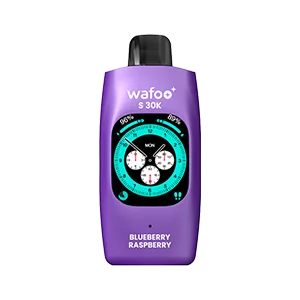
Comparez l'appareil avec le modèle officiel Produits de vapotage Wafoo Il est préférable d'afficher la page plutôt qu'une capture d'écran du vendeur. Si un produit est présenté comme un modèle intelligent, son écran, son mode de charge et son design doivent être cohérents avec la description actuelle du produit. Par exemple, Vape intelligente S 30K La page offre un meilleur point de référence qu'une image recadrée de la place de marché, car elle présente la gamme de produits dans le contexte de la marque.
De nombreuses cigarettes électroniques contrefaites présentent des défauts de finition mineurs. La police d'écriture peut être proche de la réalité, mais pas tout à fait correcte. Le port de chargement peut sembler lâche. L'embout buccal peut ne pas être parfaitement ajusté. Le tirage peut être trop serré sur un modèle et trop ouvert sur un autre. Aucun de ces signes pris isolément ne constitue une preuve irréfutable, mais leur combinaison justifie une vérification du code et un appel au fournisseur avant toute nouvelle vente.
Que peuvent faire les magasins avant qu'un lot défectueux n'arrive en rayon ?
Une procédure de réception simple suffit généralement. Ouvrez un carton, photographiez la face avant et le côté de la boîte, vérifiez plusieurs codes à gratter, confirmez les noms des modèles par rapport à la page produit officielle et notez tout détail inhabituel concernant l'emballage avant que le stock ne soit mélangé à l'inventaire principal. Si la livraison comprend plusieurs saveurs, choisissez au moins une unité de chaque groupe. Les contrefaçons arrivent souvent de manière inégale, surtout lorsque des saveurs populaires sont ajoutées en urgence à un carton mixte.
Une simple vérification des cigarettes électroniques protège également le personnel. Si un client signale un problème de goût ou une batterie déchargée prématurément, le magasin peut commencer par vérifier le code et le numéro de lot. Si le produit est conforme, la conversation peut ensuite aborder la charge, le stockage, les attentes en matière de saveur ou les limites d'utilisation normales de l'appareil. Dans le cas contraire, le magasin dispose d'une procédure simplifiée pour mettre le produit en quarantaine et contacter le fournisseur.
Pour les commandes importantes, demandez des photos de l'emballage avant l'expédition et conservez un échantillon de chaque lot. Cet échantillon n'a pas besoin d'être exposé ; il peut rester en stock avec la facture et l'étiquette du carton. En cas de réclamation ultérieure, cet échantillon servira de référence. Pour toute question nécessitant une confirmation de marque, veuillez contacter [nom de la personne ou de l'entreprise]. Assistance Wafoo avec le code, les photos du produit, l'itinéraire du vendeur et les détails du lot au lieu d'envoyer une réclamation vague.
L'objectif n'est pas de rendre chaque achat suspect, mais de laisser aux produits de qualité la possibilité de faire leurs preuves. Un emballage soigné, des codes de traçabilité, des circuits de distribution clairs et des informations cohérentes sur l'appareil contribuent à simplifier le passage en caisse. Lorsque tous ces éléments sont réunis, les consommateurs adultes sont plus confiants et les magasins consacrent moins de temps à résoudre des problèmes évitables. Dans le cas contraire, la vérification officielle du code est le moyen le plus rapide de freiner la vente avant qu'un colis défectueux ne devienne un véritable casse-tête.
FAQ (questions fréquentes)
Q1 : Comment savoir si une cigarette électronique est fausse avant de l'acheter ?
A1 : Commencez par examiner la boîte, et non le nombre de bouffées. Vérifiez l’autocollant avec le code à gratter, scannez ou saisissez le code via le site officiel, comparez le modèle avec la page produit de la marque et recherchez des étiquettes non concordantes, des scellés défectueux, des codes répétés ou un vendeur incapable d’expliquer le lot. Une cigarette électronique contrefaite peut présenter un seul avertissement clair, mais il s’agit généralement d’un ensemble de petits problèmes.
Q2 : Le simple fait de scanner le code suffit-il pour faire confiance au produit ?
A2 : Un code d’erreur clair est un premier point positif, mais il doit être interprété en complément de l’examen complet de l’emballage et du canal de distribution. Avant d’ouvrir l’appareil, effectuez une vérification du produit, puis comparez le modèle, la saveur, les avertissements et les informations du vendeur. Si la page de vérification affiche un résultat étrange ou ne correspond pas au produit reçu, suspendez la vente et contactez la marque ou le fournisseur.
Q3 : Que doit faire un magasin si plusieurs boîtes semblent suspectes ?
A3 : Conservez les boîtes séparément du stock habituel, photographiez l’emballage, notez le circuit d’approvisionnement et vérifiez les codes sur plusieurs saveurs ou cartons. N’intégrez pas les unités suspectes à votre stock en attendant une réponse. Envoyez à la marque ou au distributeur des photos nettes, les codes, les détails du lot et les informations de facturation afin qu’ils puissent examiner le problème rapidement.