
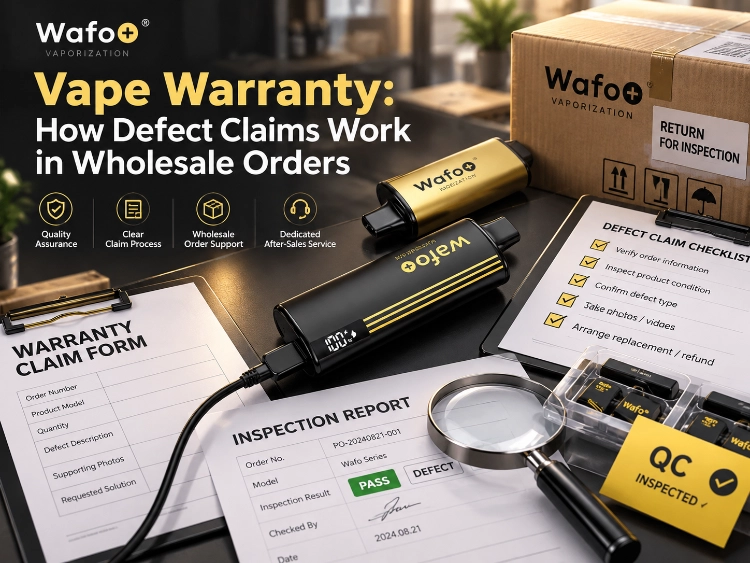
A carton of 600 disposables reached a warehouse, and 41 units failed inside two weeks. Four came back dead. Nine leaked in the pouch before the seal was opened. Six autofired in the drawer. The rest tasted burnt on the first draw.
The distributor sent photographs and a batch code. The brand forwarded them to the factory. The factory asked for the invoice.
That request decided the claim. A device with a batch code behind it was replaced. A device with a story attached was refused.
Two things separated the 41 units that got paid for from the ones that did not.
What a Vape Warranty Covers
Defect Against Preference
A dead device qualified. A leaking device qualified. A device that fired with nobody drawing on it qualified.
A flavour a buyer had stopped liking did not. Neither did a device dropped on a shop floor, charged on the wrong adapter, or left in a car over a summer. Those failures arrived looking like the first three, and counter staff decided which story held.
Failures That Show Up Inside a Week
Four failure modes carried almost every claim in that shipment.
Four came back dead, which meant a flat cell or a board that never woke up. Nine leaked before the seal was opened, and the seam had given way in a hot container after a pod was pressed in at the plant. Six fired with nobody drawing on them, so the coil cooked until the cell drained; airflow sensing had failed, or condensation had bridged the sensor. The rest tasted burnt on the first draw, because the wick had gone dry before the coil fired on a half-primed 2.0ml pod.
Two of those belong to the factory. Two can belong to the trip.
The Record Trail That Decides the Claim
Batch Codes, Serials and the Invoice Chain
That code pinned each unit to a production window and a material lot. The invoice pinned the carton to a purchase order. Together they answered the only question that mattered: whether the failing units came from the run the factory recorded.
Wafoo prints an authenticity sticker on the packaging with a code under a scratch coating, and scanning it returns the result through the product verification service. Files that arrived with those scans moved through the claim in a day. Files without them stalled.
Why an Opened Device Complicates the Window
Return windows assume unused goods. A defect shows up after the box is open, often after the first draw.
That is the gap worth writing into the terms. A 30-day window demanding original packaging and no sign of use left out the failures a warranty existed to cover.
Evidence the Factory Asks For
Photographs carry more weight than descriptions. One picture of a leak in the pouch. One of the coating still intact on the sticker. One of the carton label, for the batch code.
Add the count. Forty-one failures in a 600-unit carton read as a defect rate, and a defect rate started a conversation about the run rather than about one unit.
Setting the Terms on a Wholesale Order
The Dead-on-Arrival Window
The window went into the terms in days from delivery, with the dead-on-arrival case named. Distributors and brands normally wrote a short window for units that never worked and a longer one for units that failed later.
Both numbers went into the order, because counter staff used whichever the sheet showed.
Replacement, Credit or a Deduction
Three ways settled a claim.
Replace the units on the next shipment. Credit them against the outstanding balance. Or apply a defect allowance agreed at order time, which covered small failure counts without a claim per unit.
That allowance suited a 600-unit carton. One or two percent of a run cost less to absorb than to argue about, and it kept field data flowing back to the plant.
Return Freight and the Paperwork
Someone had to pay to move a failed device. Whoever it was, the terms had to say so before the first claim, and the return needed the batch code attached or the unit arrived anonymous.
Small-value units were scrapped against photographs instead of shipped back. A carton of failed units went back in bulk, with the batch code written on the outside.
Handling the Claim Inside the Channel
Retailer to Distributor to Brand to Factory
That claim travelled four steps. The counter took it from a customer. The distributor aggregated it. The brand decided whether the pattern justified a factory claim. The factory answered with the batch record.
Each step lost detail unless the evidence travelled intact: the photograph, the batch code, the invoice line.
Where the Timing Breaks
Two delays killed claims.
One sat at the counter, where a defective unit waited in a drawer until somebody collected enough of them. The other sat at the brand, where claims piled up until the quarter closed.
Wafoo keeps the commercial answers on the support page — 500 units minimum on regular products, 3 to 5 days for stock, 15 to 25 days for custom orders, as the product and service FAQ records. A claim filed months after delivery meets a batch record that has moved on, and the trail goes cold.
Checking the Devices Before They Ship
Sealed Units and Refillable Kits
Inside a sealed disposable, the cell and the liquid share one housing. A refillable kit split those parts, so a failure could follow the pod rather than the device, and swapping one part told the engineer which.
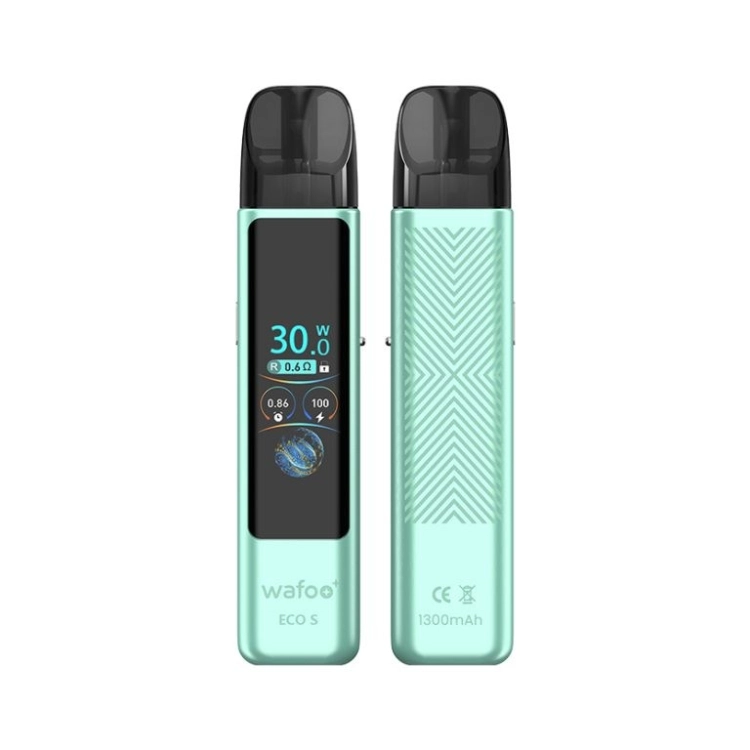
Wafoo shipped both directions. The S 30K held 25ml and listed up to 30,000 puffs on dual mesh coils, the ECO S ran a 1300mAh cell with a 2.0ml pod and a 1.47-inch display, and the ECO AWAKE carried two pre-refillable bottles and a battery display, all within the product range.
The Three Checks on a Sample
Three checks settled the sample on that order.
Weight went first, because a leaking unit carried liquid it should not. A pairing check ran overnight, because a device draining in the drawer showed itself before it reached a counter. A first-draw test ran on a primed pod, because burnt taste at that stage pointed at the wick rather than at the coil.
Wafoo builds pod systems and e-liquids, and a claim on any of them started with the batch code on the carton.
Conclusion
That claim stood on three things: a defect that qualified, a record that tied the unit to a run, and terms written before the first failure. The 41 units in that carton got replaced because the batch code and the photographs travelled together. Claims without them cost the same delivery and end in an argument.
Questions fréquentes
Q1: How long is a vape warranty on a wholesale order?
A1: It depends on what the two sides wrote down. That order carried a short dead-on-arrival window and a longer window for failures in use. The policy pages of most distributors name a number around 30 days, and the term sheet beats the policy page.
Q2: Can a distributor return leaking or autofiring units?
A2: Yes, when the failure qualified and the record supported it. Leaking and autofiring both pointed at the device, and a batch code plus a photograph usually settled the claim without the units travelling back.
Q3: Which records should a brand keep from a shipment?
A3: The invoice, the carton batch code, and a few scans of the authenticity sticker. Those three answered the claim on that shipment, and the same three answer a retailer’s question when a complaint lands.