
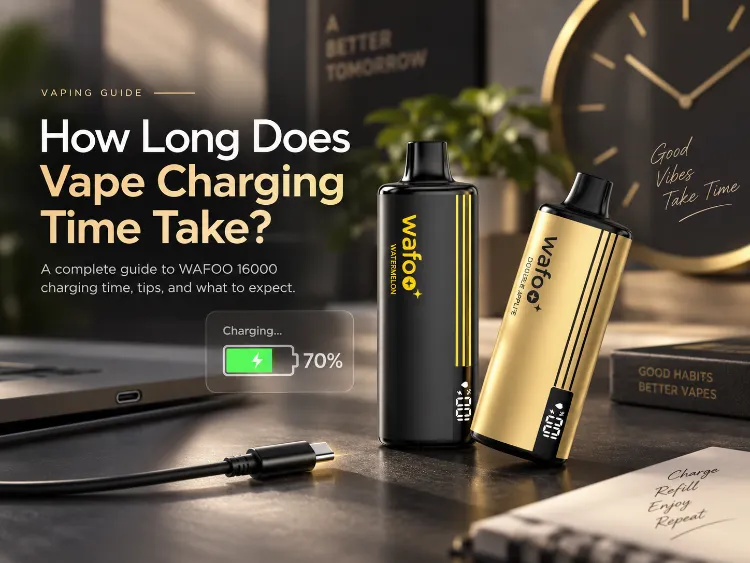
Vape charging time has no single answer, because the reader is holding one specific device. A compact pod and a larger rechargeable disposable do not pull power at the same rate, and two devices sold with the same battery rating can still behave differently once the cable, the power source and the condition of the port are taken into account.
What follows is a short verification path rather than a rounded estimate. It starts with why the duration moves, then works through the fields that pin the expectation to an exact model, the parts of the charging setup a reader can actually change, the device’s own charging signal and the instruction that settles whether the device should be in use while it is plugged in.
Know Why Charging Time Varies
Charging time is set by three things at once: how much energy the cell holds, how much current the device accepts and how much of that current actually reaches the cell. Published ranges usually mention only the first of the three, which is why they disagree with each other and with the device in the reader’s hand.
The battery’s job inside the device is to store energy and supply it to the heating element, and its capacity is expressed in milliampere-hours (mAh). A capacity rating determines how long the device can be used after a full charge, so it describes runtime rather than the time the charge itself takes. The power management system controls the current flow to the heating element, and that circuit shapes how quickly the cell refills. A larger capacity can therefore mean a longer runtime without a matching increase in charging time.
Format explains much of the range. A compact disposable carries a small battery capacity that suits a limited number of uses, while a rechargeable format pairs a larger capacity with a higher-power battery and reaches far higher puff counts. The same capacity and power difference also shows up in charging behaviour, so a figure taken from one format says very little about another.
Rechargeable disposables use a built-in rechargeable battery that charges through USB-C or another interface. That design extends usage time and reduces the hassle of replacing a device as often, and it moves the capacity question to a larger cell. Because the battery is built in rather than swappable, the interface published for that exact model is the only one that applies to it. The interface belongs to the device specification rather than to the accessories a reader might already own.
Disposable vape charging time therefore applies only to the formats built to be recharged; a single-use device has no charging cycle to measure at all.
Most e-cigarette batteries are lithium cells. High energy density, a low self-discharge rate and rapid charge and discharge capability are properties of the cell chemistry rather than a schedule a reader can apply to one device, so they never convert a capacity rating into a predictable number of minutes. They describe how a cell behaves in general, not how long one model will take.
How often a device needs charging is a further question, separate from how long each charge takes, and it follows from how long a rechargeable or disposable device lasts between sessions.
Read the Exact Device Specification
Before estimating anything, open the product page for the model in hand and note two fields: the battery rating and the charging interface. Both belong to the device the reader actually owns, which is why they do more work than any published range. The current model pages hold them for every device in the line.
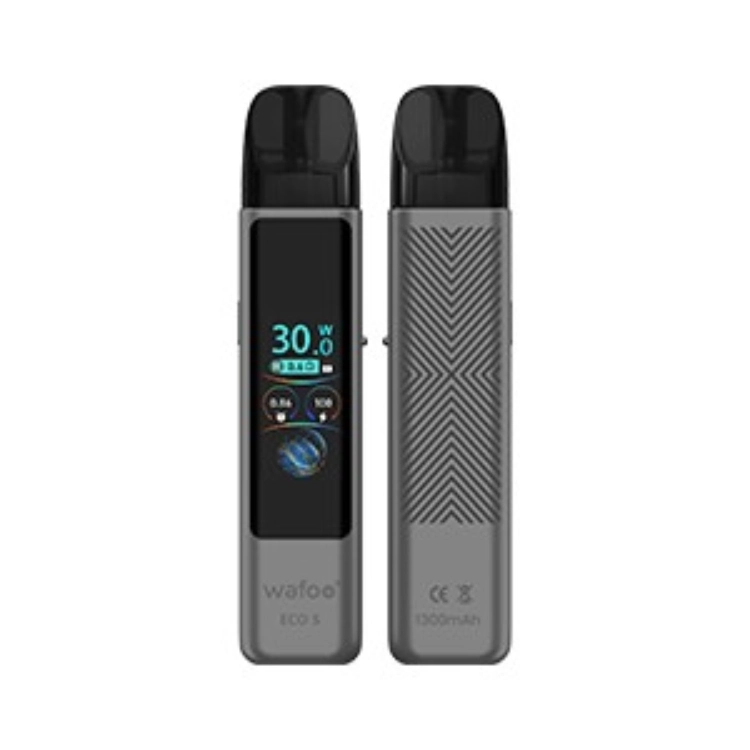
That spread is wide across the range. The Wafoo SPHERE 50K is listed with an 850mAh battery and Type-C charging. A 600mAh rechargeable battery pairs with USB-C fast charging on the WAFOO 16000, while the ECO S uses a 1300mAh internal battery with Type-C fast charging. The XANDER builds in a 300mAh plus 850mAh battery configuration with a Type-C charging port. Four devices, four different specifications. None of them states a charging duration, and none of them carries across to a sibling model — not even the two-cell XANDER configuration, which is one device specification rather than two separate charging times.
Readers who arrive from a model-specific query for another brand meet the same wall. Someone searching for juul charging time is looking for the published behaviour of one closed-pod system; that result describes that device and does not transfer in either direction. Keeping the brand and the model attached to every number is the habit that prevents a wrong estimate.
Check the Charger, Cable and Port
The device port is fixed by the model. Everything plugged into it is a choice, and those choices are where most “this is taking too long” situations begin. There is no dial that lets a reader adjust vape charging time directly, but the cable, the adapter, the power source and the way the port is treated are all variables that can be changed and compared. Separating them turns a vague delay into something testable.
Match the Charger and Cable to the Device Port
A connector that fits is not automatically a cable that charges. Some cables carry power, some carry data, and a slim cable packaged with an unrelated accessory may not carry the current a larger device draws. Where a product page names an interface, matching the cable to that interface is the first check, and the device decides what it expects rather than the cable end that happens to slide in.
Rule Out Port Condition and Power Source
The power source sets the ceiling for everything downstream of it. An adapter rated for a low output does not deliver the same charge as a higher-output one, a laptop USB port is usually more limited than a wall adapter, and a shared or unstable supply can change behaviour from one session to the next. Swapping one part at a time, cable first and adapter second, shows which substitution actually made a difference.
The port itself deserves the same attention. Lint, debris, a worn connector or a port that no longer holds the cable firmly all interrupt contact, and a loose connection can make a healthy device look slow. Comparing against a second cable and adapter known to work separates a port problem from a device problem. Once the hardware is known to be sound, charging a disposable vape properly is mostly a matter of leaving the connection undisturbed until the device reports its own status.
Interpret the Charging Indicator
Not every device reports charging the same way, and few report a countdown. Some use a light that changes state, and some show nothing beyond the fact that the device powers on.
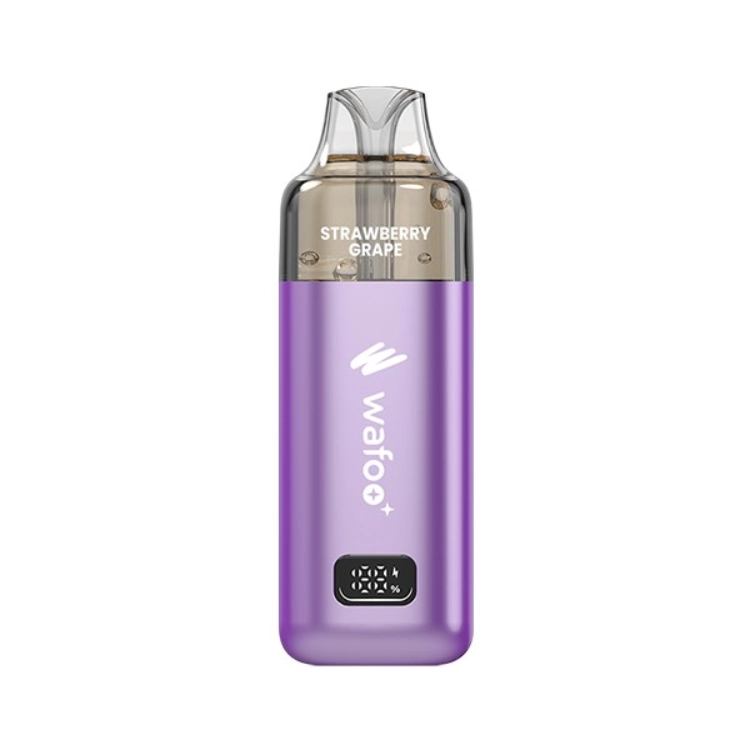
A screen-equipped device can show a battery and e-liquid level indicator that displays the remaining battery power in real time, which lets the reader plan ahead instead of guessing. Some models also surface status prompts, such as a low-battery prompt, on that same screen. The presence of a readout changes how a reader judges a charge, and it is a model-level feature rather than something to assume across a whole range.
On the Wafoo S 30K, the smart display shows battery level and puff count. That is a status signal for that one model, not a promise that every device indicates completion the same way or after the same interval. Before concluding that a device has finished charging, a reader should find the indicator description for the exact model and compare what the display actually does with what is documented for it.
When the signal is unclear, the productive move is to let the charge run, avoid repeated unplugging and re-seating, and note what the device showed at the start and the end of the session. Those notes are also exactly what a support conversation needs.
Follow the Device’s Charging Instructions
The last check is the one readers skip. Whether a device should be used while it is plugged in is a device-specific operating question, not a general rule that can be settled from a generic guide. Practices differ between formats and between models, so the guidance that applies is the one published for the exact product.
That is why a question phrased as “is it safe to hit a vape while it’s charging?” is better answered by the product’s own instructions than by a blanket yes or no. Read the model page and the documentation that comes with the device before drawing on it during a charge, and treat any general answer found elsewhere as a prompt to verify rather than a rule to follow.
If charging behaviour changes and the setup checks have already been made, the details worth passing on are the exact model, the interface listed for it, the cable and adapter in use and what the indicator did. That combination is specific enough for support to work from, and it avoids a round of guessing.
Conclusion
Charging time is not a number to memorise but a short sequence to work through. Confirm the model, read its battery and interface fields, check the cable, adapter and port condition, interpret that model’s own charging signal and follow its instructions before using the device while it is plugged in. Worked in that order, a slow charge is usually explained by the setup, and anything left over becomes a specific device question that the exact product page and support channel can answer. Send the model name, the interface listed for it, the cable and adapter in use and what the indicator shows to the Wafoo team, and the next step becomes a precise check instead of another estimate.
FAQs
Q1: How long should a vape take to charge?
A1: There is no universal duration. Charge time depends on the exact model’s battery capacity and charging interface, the cable and power source in use and the condition of the port, so confirm the device’s own published fields before setting an expectation.
Q2: Does battery capacity tell me the exact charging time?
A2: No. A rating in mAh describes how much charge a cell stores, not the rate at which the device accepts it. Two devices with different capacities can behave differently, and capacity alone never converts into minutes or hours.
Q3: Can I use a vape while it is charging?
A3: That depends on the exact product’s own instructions. Check the model page and the documentation that comes with the device before drawing on it during a charge, and use the support path for that model if the guidance is unclear.