
A power number can look reassuringly precise, right up to the point where it is not. A pod may taste thin at 17 W, settle into a satisfying draw at 19 W, and feel hot and wasteful only a small step later. The screen has not become unreliable. It is showing a setting whose result still depends on the installed cartridge, the airflow, the liquid, and the way the device is being used.
The best vape wattage is therefore not the highest number the device can show. It is the setting inside the compatible pod’s range where the draw is clean, the vapor feels right, and the wick has time to stay supplied. That answer changes when the pod, liquid, or airflow changes. A small, orderly test is more reliable than an online chart that knows nothing about the device in hand.
Start With the Installed Pod, Not the Device Maximum
The pod is where electrical power becomes heat. Its stated operating range is the first boundary to respect. A lower coil resistance commonly works in a different range from a higher-resistance cartridge in the same product family, but resistance only narrows the starting point. It cannot tell a user the exact number to select without the pod maker’s compatible guidance.
Coil construction affects the result as well. Mesh spreads the heated area across a wider surface than a small round wire coil, but it still depends on liquid reaching the wick. Power that feels comfortable with one mesh layout may be unsuitable for another pod marked with a similar resistance. For that reason, an adjustable wattage vape should be treated as a tool for fine adjustment, not as an invitation to chase its highest output.
That distinction is worth making on a retail counter. A maximum wattage is a capability, not a recommended daily setting. The useful advice is simpler: identify the pod, fill it properly, read the compatible range, and begin at its lower end. If the pod has just been opened or refilled, give the wick time to take up liquid before asking it for more power.
Buyers comparing refillable formats can use the WAFOO pod system range to see which device controls and pod arrangements fit their intended draw style before they begin sample testing.
Find a Comfortable Setting in Small Steps
Finding pod vape wattage does not need a complicated formula. Fill the pod, set the airflow to a neutral position, and make sure the battery is not nearly empty. Take an ordinary draw at the lower part of the stated range. The point is to establish a normal baseline, not to take an extra-long test pull that no one would repeat during everyday use.
Change one thing, then read the result
If the response feels muted, raise the setting by a small increment and repeat the same type of draw. Look for a useful change in flavor and response, not merely more visible vapor. Stop when the next increase brings mostly heat, a dry edge, or faster liquid use. That earlier setting is often closer to the pod’s practical sweet spot.
Avoid changing power, airflow, and e-liquid at the same moment. The result may feel dramatically different, but there is no clean way to know why. Holding two variables steady gives a customer, retailer, or sample evaluator a repeatable result: this cartridge, at this setting, with this liquid, produced this draw. That is far more useful than declaring a single number to be universal.
Airflow and E-Liquid Can Move the Sweet Spot
The same vape wattage can feel different after an airflow adjustment. A more open intake lets additional air pass through the atomizing area, which can cool the vapor and loosen the pull. A tighter setting can make that same electrical output feel denser and warmer. When a draw feels hot, a modest airflow adjustment may solve the problem without a large power reduction.
Liquid supply matters just as much. The coil can only vaporize what reaches the wick. A thicker liquid may move more slowly through a compact pod, while sweet or heavily flavored liquids can leave more residue on the heated surface over time. Raising power aggressively when the wick is struggling can create a dry note even when liquid remains visible in the tank.
This is why a power setting that works with one refill does not automatically travel to another. For a B2B sample review, use the liquid actually planned for the market, keep the fill level and airflow position consistent, and note the selected power before drawing conclusions. WAFOO’s e-liquid options can be reviewed alongside the proposed hardware when buyers are planning that match.
Recognize When Power Is the Problem and When It Is Not
Too much wattage usually leaves clues. Vapor becomes hotter than intended, liquid falls faster, and flavor may turn harsh when the coil uses liquid faster than the wick can resupply it. Repeating that condition can shorten useful coil life. Reducing power one step and taking a normal draw is a better test than continuing to push the same cartridge.
Too little power can feel different: delayed response, light vapor, or muted flavor. Even then, do not assume the number on the screen is the only cause. Check the battery, the liquid level, the pod connection, and the condition of the cartridge first. A nearly empty tank or a poor contact can mimic an underpowered pod.
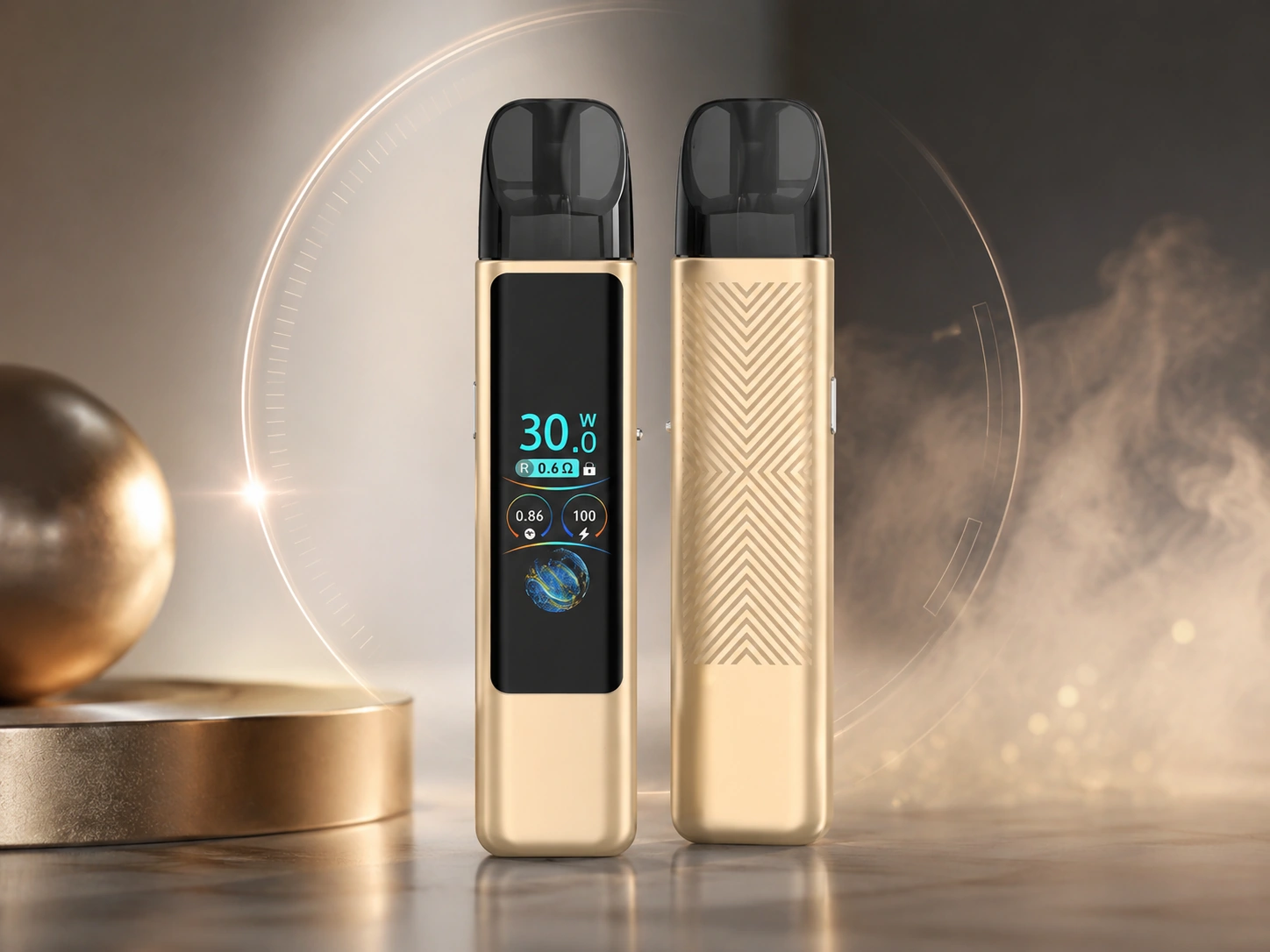
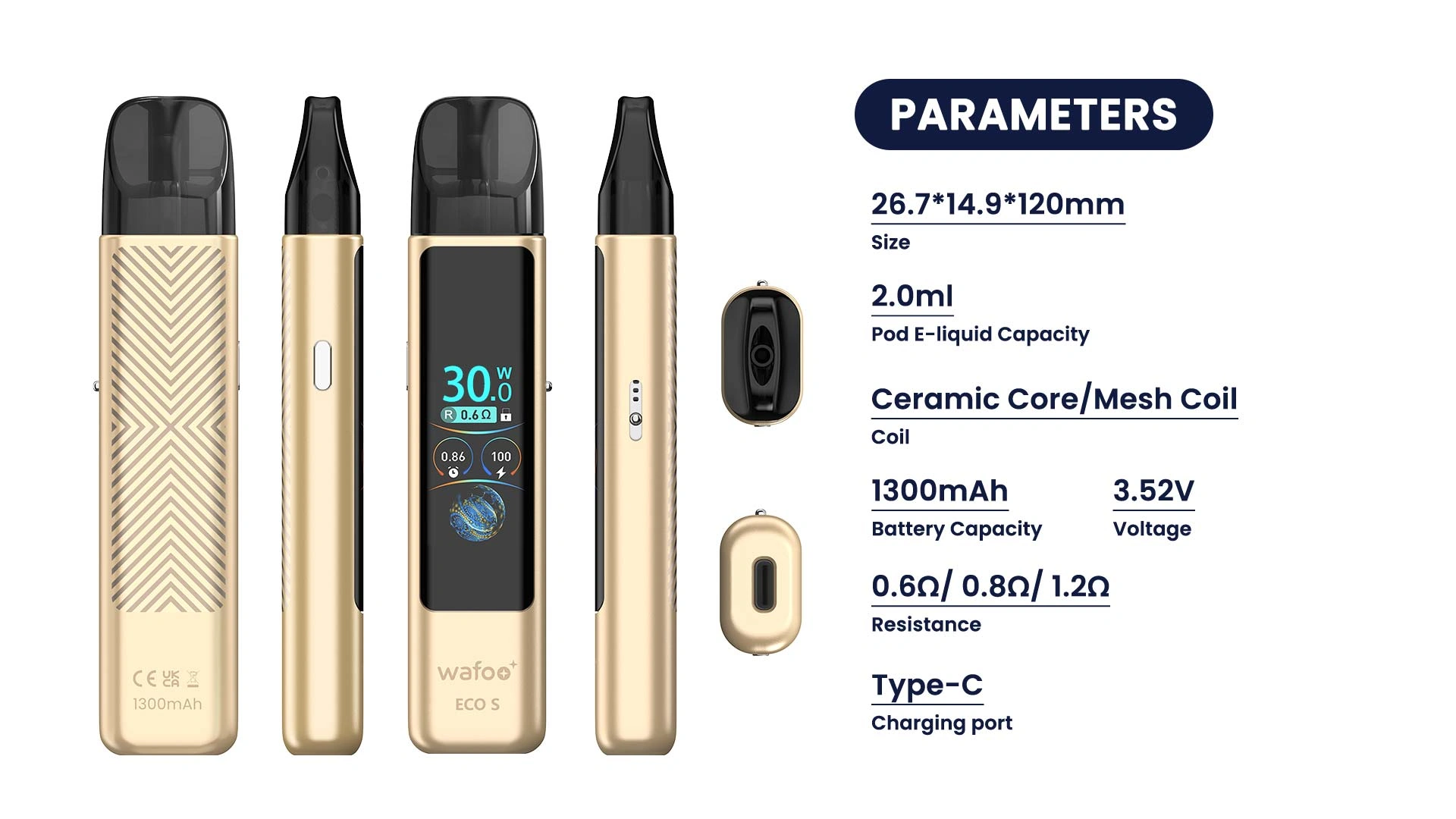
The ECO S refillable pod kit makes those checks less abstract. Its transparent 2.0 ml side-filling pod shows the liquid level, while the 1.47-inch TFT display keeps the selected wattage and battery information in view. The system offers adjustable airflow and a 15 W to 30 W range in 0.5 W steps. With a compatible pod, that allows the user to alter one setting at a time rather than guessing what the device is doing.
For retailers, those visible controls make a better demonstration than a promise about maximum output. Show the liquid level, show the selected number, make one small adjustment, and let the customer understand the change. For distributors, record the same details across samples. It turns a casual impression into a useful basis for comparing configurations.
Conclusion
There is no single right number for every pod vape. Begin with the compatible pod range, work upward in small steps, and stop as soon as the draw is clean and responsive. Coil resistance tells you where to begin; airflow and e-liquid explain why the same number can later feel different.
For wholesale, distribution, or private-label work, the WAFOO product team can discuss sample configurations when buyers provide their pod specifications, intended liquid, draw preference, and market requirements.
FAQs
Q1: What wattage should I use for a pod vape?
A1: Use the compatible range stated for the installed pod or coil. Begin near its lower end and increase gradually only until flavor and vapor feel balanced without unnecessary heat.
Q2: Does a 0.8 ohm pod need less wattage than a 0.6 ohm pod?
A2: Often it does, but the exact operating range depends on the cartridge design. Match the setting to the compatible pod guidance rather than to resistance alone.
Q3: Can too much wattage burn a pod?
A3: Yes. Excessive power can vaporize liquid faster than the wick can replace it, leading to harsh or burnt flavor and potentially shortening coil life.