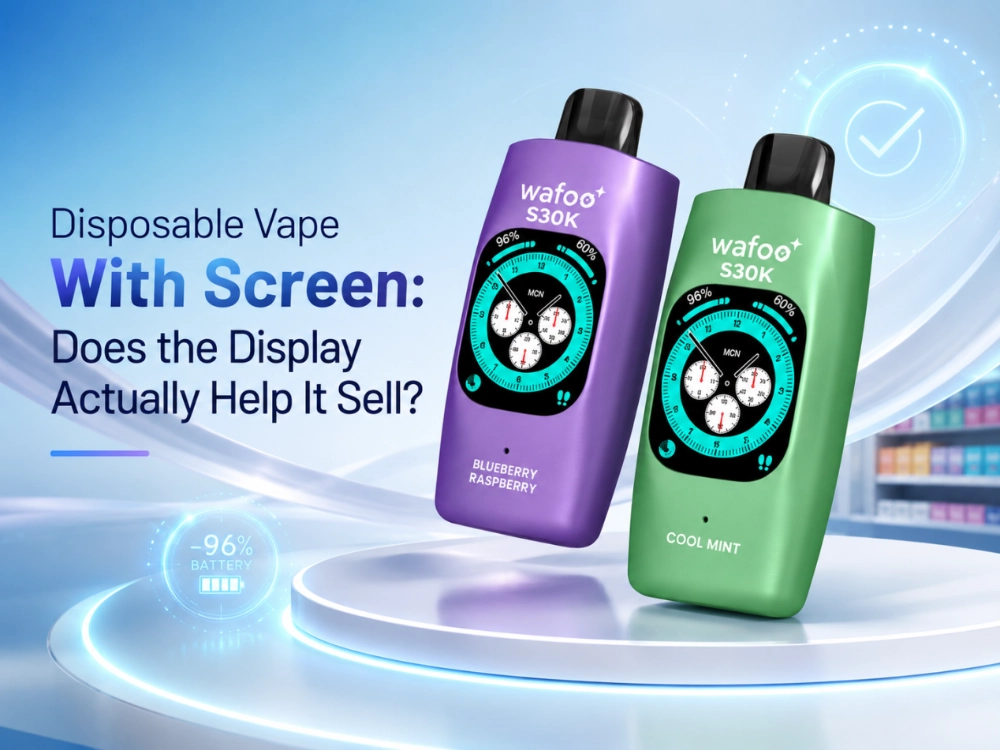
Ein Display kann eine Einweg-E-Zigarette fortschrittlicher wirken lassen, aber ein Einzelhändler braucht einen besseren Grund, um ihr einen Platz im Regal einzuräumen.
Die entscheidende Frage ist, ob das Display dem Kunden hilft, das Produkt zu verstehen. Akkustand, Zuginformationen, Betriebsmodi und andere sichtbare Daten können Unsicherheiten reduzieren. Ein Bildschirm mit Funktionen, die das Personal nicht erklären kann, wirft hingegen möglicherweise mehr Fragen auf, als er nützt.
Für B2B-Käufer sollte eine Einweg-E-Zigarette mit Display daher eher als Verkaufsargument denn als technologisches Feature betrachtet werden.
Was muss ein Verkaufsdisplay für E-Zigaretten im Einzelhandel leisten?
Das beste Vape-Display macht einen unsichtbaren Zustand leichter verständlich.
Kann der Kunde den Akkustand sehen?
Der Akkuzustand lässt sich allein anhand des Aussehens nur schwer beurteilen. Eine Akkuanzeige kann dem Benutzer einen schnellen Hinweis geben, bevor das Gerät den Betrieb einstellt.
Das wird umso nützlicher, je länger die Geräte im Einsatz bleiben.
Bei einem Produkt mit sehr kurzer Lebensdauer sind möglicherweise nicht viele Informationen erforderlich. Ein wiederaufladbares Gerät mit hoher Kapazität bietet Nutzern hingegen mehr Anlass, sich zu fragen, ob die Batterie, das E-Liquid oder eine andere Komponente die Leistungsveränderung verursacht.
Können die Mitarbeiter die Funktion in Sekundenschnelle demonstrieren?
Der Einzelhandelswert hängt unter anderem davon ab, wie schnell ein Merkmal demonstriert werden kann.
Ein Bildschirm, der sofort den Akkustand oder eine andere bekannte Anzeige anzeigt, ist einfacher zu demonstrieren als ein Menü, das mehrere Schritte erfordert.
Hier erweist sich die eine oder andere smarte Vape-Funktion als nützlich, während andere zu Nischenprodukten werden.
Es geht nicht darum, erweiterte Funktionen zu entfernen. Es geht darum herauszufinden, ob diese Funktionen den angestrebten Kunden unterstützen.
Wann wird ein Bildschirm zu einem echten Alleinstellungsmerkmal?
Eine Einweg-E-Zigarette mit Display hat einen höheren Wert, wenn das Display ein umfassenderes Produktkonzept unterstützt.
Intelligente Funktionen benötigen eine klare Zielgruppe
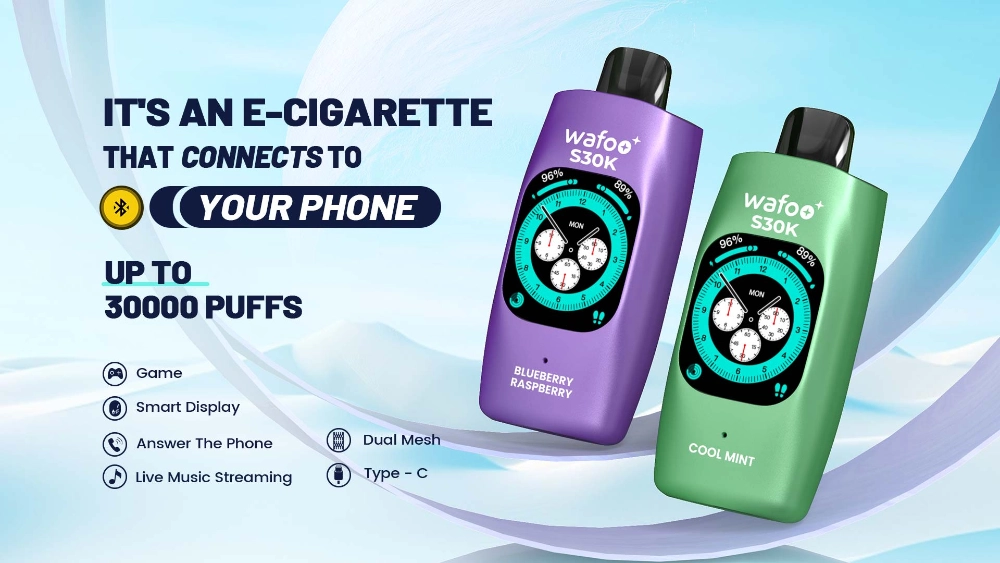
Die Wafoo S 30K ist ein gutes Beispiel. Sie kombiniert ein Smart-Display mit Bluetooth-Konnektivität, Musikstreaming, integrierten Spielen, Anrufannahme, Dual-Mesh-Technologie, einem 25-ml-Tank und bis zu 30.000 Zügen. Ihr Display ist Teil eines umfassenderen interaktiven Produkts und nicht nur ein eigenständiges Dekorationselement.
Einzelhändler, die diese Art von intelligenter E-Zigarette evaluieren, können die folgenden Punkte überprüfen: Wafoo S 30K interaktives Einweggerät im Kontext eines technologieorientierten Kundensegments.
Sichtbarkeit kann genauso wichtig sein wie Elektronik.
Ein Bildschirm ist nicht die einzige Möglichkeit, dem Benutzer Informationen zu vermitteln.
Die SPHERE S15000 kombiniert einen transparenten E-Liquid-Tank mit einem intelligenten Display. Ihre Ausstattung umfasst einen 14-ml-Tank, einen 650-mAh-Akku und eine Echtzeitanzeige von Akku- und E-Liquid-Informationen.
Die transparente Smart-Vape SPHERE S15000 veranschaulicht eine wichtige Produktgestaltungsentscheidung: Digitale Informationen und die direkte visuelle Flüssigkeitsinspektion können sich gegenseitig unterstützen.
Das lässt sich leichter erklären als eine elektronische Flüssigkeitsschätzung allein.
Reduziert eine Akkuanzeige die Kundenfragen?
Oft ja – aber nur für die Fragen, die der Indikator tatsächlich beantwortet.
Eine Akkuanzeige hilft dabei, niedrigen Akkustand von einem leeren Gerät zu unterscheiden. Sie kann Benutzer auch daran erinnern, dass ein wiederaufladbares Produkt aufgeladen werden muss.
Was es nicht kann, ist, jede schwache Zeichnung zu diagnostizieren.
Wenn ein Gerät über ausreichend Batterie verfügt, die Spule oder die Flüssigkeitszufuhr jedoch nicht mehr ordnungsgemäß funktioniert, wird die Ursache nicht automatisch auf dem Display angezeigt.
Dies ist für die Schulung im Einzelhandel relevant. Den Mitarbeitern sollte nicht beigebracht werden, jede Bildschirmanzeige als vollständiges Diagnosesystem zu betrachten.
Ein Display ist nützlich, weil es einen Teil des Produktzustands deutlicher zeigt.
Sind mehr Bildschirminformationen immer besser?
NEIN.
Jedes zusätzliche Symbol oder jeder zusätzliche Modus erzeugt etwas, das der Käufer möglicherweise verstehen muss.
Mehr Funktionen können die Demonstrationszeit verlängern
Eine einfache Akkuanzeige bedarf fast keiner weiteren Erklärung.
Ein intelligenter Verdampfer mit Spielen, Anruffunktionen, Modi, Ausgabeoptionen und zusätzlichen Informationen erfordert möglicherweise eine gezieltere Verkaufspräsentation.
Das kann in einem Geschäft, in dem Kunden aktiv nach interaktiven Produkten suchen, von Vorteil sein. In einem Geschäft, in dem die meisten Einkäufe schnell und bequem erfolgen, kann es hingegen unnötig sein.
Die Bildschirmqualität spielt bei Produkten mit längerer Nutzungsdauer eine größere Rolle.
Mit zunehmender Nutzungsdauer des Geräts gewinnt die Displayklarheit an Bedeutung.
Nutzer können das Gerät mehrmals aufladen und über einen längeren Zeitraum damit interagieren. Das Display wird so zu einem integralen Bestandteil der täglichen Benutzeroberfläche und bleibt nicht nur eine einmalige Neuheit.
Das ist ein Grund, warum das Design des Bildschirms zusammen mit Batterie, Flüssigkeitskapazität, Spulenarchitektur und Bedienelementen bewertet werden sollte.
Kann ein transparenter Tank sich besser verkaufen als ein Bildschirm?
Sie lösen unterschiedliche Probleme.
Ein transparenter Tank liefert direkte visuelle Informationen über den Flüssigkeitsstand. Ein Display kann Akkustand, Betriebsmodi, Zugfrequenzen oder den geschätzten Flüssigkeitsfüllstand anzeigen.
Das beste Design hängt davon ab, was das Produkt dem Kunden vermitteln will.
Der SPHERE 50K beispielsweise kombiniert einen transparenten, nachfüllbaren 20-ml-Tank mit einer einstellbaren Ausgangsleistung von bis zu 30 W, einem 850-mAh-Akku, RGB-Beleuchtung, Mesh-Coil und USB-C-Ladeanschluss. Hier geht die direkte Sichtbarkeit des Liquids mit einer präziseren Hardware-Steuerung einher.
Käufer können diese Positionierung durch die SPHERE 50K transparente Steuerungsplattform.
Ein Händler muss sich daher nicht fragen, ob ein Sichtfenster oder ein transparenter Tank generell besser ist. Die wichtigere Frage ist, welche Unsicherheit durch die jeweilige Funktion beseitigt wird.
Was sollten B2B-Käufer an einer Einweg-E-Zigarette mit Sieb testen?
Bestätigen Sie die Funktion nicht allein anhand einer Produktgrafik.
Bitte prüfen Sie die Lesbarkeit bei normaler Beleuchtung.
Das Display sollte an einem typischen Tresen oder im normalen täglichen Gebrauch gut lesbar sein.
Winzige Symbole, übermäßige Animationen oder geringer Kontrast können den praktischen Nutzen mindern, selbst wenn die Spezifikationen beeindruckend aussehen.
Prüfen Sie, ob sich die angezeigten Informationen vorhersehbar ändern.
Der Batteriestatus sollte sich während des normalen Gebrauchs und Ladevorgangs verständlich anfühlen.
Wenn das Gerät Informationen zur Zugfrequenz oder andere Statusdaten anzeigt, müssen die Mitarbeiter wissen, was die angezeigten Werte bedeuten.
Prüfen Sie, ob der Bildschirm die Produktstory unterstützt.
Bei einer einfachen Einwegbatterie mag die Sichtbarkeit der Batterie ausreichend sein.
Bei einer intelligenten E-Zigarette kann eine reichhaltigere Benutzeroberfläche die Bluetooth- oder interaktiven Funktionen verbessern.
Bei einem transparenten Gerät eignet sich das Display möglicherweise besser für die Anzeige von Stromversorgung und Betriebsmodus, während der Tank eine direkte Sicht auf die Flüssigkeit ermöglicht.
Das Design funktioniert am besten, wenn jedes Element eine separate Aufgabe hat.
Trägt das Display dazu bei, dass sich das Produkt nach der ersten Vorführung besser verkauft?
Dies ist die Frage, die Einzelhändler nach der Markteinführung erneut prüfen sollten.
Ein Bildschirm mag beim ersten Eindruck helfen, aber Folgebestellungen hängen davon ab, ob das Gesamtprodukt für den Kunden funktioniert.
Dazu gehört:
- Geschmackskonsistenz;
- ziehen;
- Batteriezyklus;
- Flüssigkeitskapazität;
- Laden;
- Schnittstelle;
- Größe;
- Preispositionierung.
Der Bildschirm sollte die Verpackung unterstützen, nicht das gesamte Produkt tragen.
Die Entwicklung von intelligenten Geräten bei Wafoo umfasst einfache Batterie-/Flüssigkeitsanzeige und interaktivere Konzepte. Dadurch stehen den Händlern verschiedene Komplexitätsstufen der Anzeige zur Verfügung, anstatt nur ein einziges, festes Smart-Screen-Format.
Schlussfolgerung
Eine Einweg-E-Zigarette mit Display ist dann wirtschaftlich sinnvoll, wenn das Display das Produkt verständlicher, einfacher vorzuführen und leichter zu bedienen macht.
Der Batteriestatus kann Unsicherheiten reduzieren. Transparente Tanks ermöglichen die direkte Sicht auf den Flüssigkeitsstand. Interaktive Bildschirme können Produkte für Kunden differenzieren, die Wert auf intelligente Funktionen legen.
Einzelhändler, die eine displayorientierte SKU in Betracht ziehen, können Fordern Sie Muster von Smart-Geräten und kommerzielle Details von Wafoo an. und vergleichen Sie den Bildschirmwert mit Spule, Tank, Akku, Geschmack und Kundenzufriedenheit.
Häufig gestellte Fragen
Frage 1: Lässt sich eine Einweg-E-Zigarette mit Sieb leichter verkaufen?
A1: Das kann der Fall sein, wenn der Bildschirm dem Kunden nützliche Informationen wie den Akkustand liefert oder eine klare Smart-Funktion unterstützt. Ein Display, das die Bedienung unnötig verkompliziert, ohne ein Nutzerproblem zu lösen, kann einen geringeren Wiederverkaufswert erzielen.
Frage 2: Ist ein transparenter Tank besser als eine Füllstandsanzeige für E-Liquid?
A2: Sie liefern unterschiedliche Informationen. Ein transparenter Tank ermöglicht die direkte Sichtprüfung, während eine elektronische Anzeige einen vereinfachten Status darstellt. Manche Produkte nutzen beide Ansätze.
Frage 3: Was sollten Einzelhändler auf einem intelligenten Vape-Display testen?
A3: Prüfen Sie die Lesbarkeit, die Batterieinformationen, die Einfachheit der Menüführung, wie leicht das Personal die Funktionen vorführen kann und ob der Bildschirm die breitere Positionierung des Produkts unterstützt.