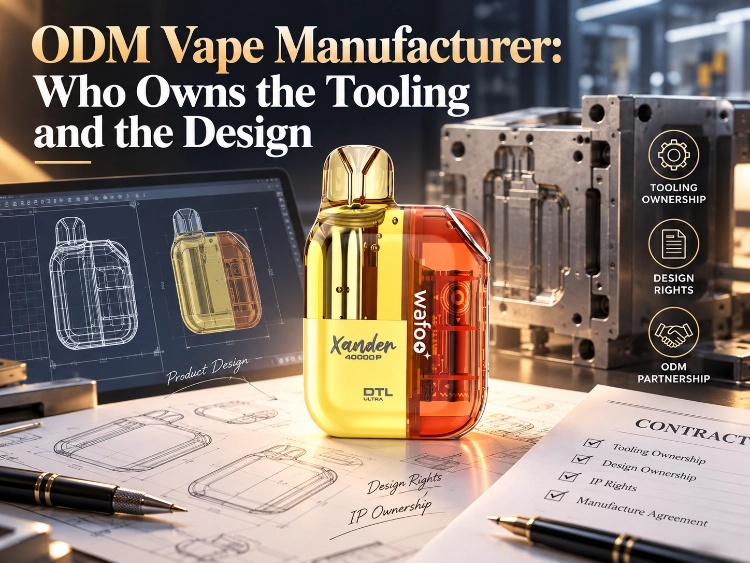
A brand asked for a new shell on an existing pod system. Same board, same 2.0ml pod, same 1300mAh cell, and a housing nobody else in the range carried.
The factory quoted a tooling fee, and the brand paid it. Eight months later the brand wanted a second supplier for the same shell, and the conversation ended in a room with three people and one mould.
One sentence in the terms caused it: a clause that never said who owned the tool, who held the drawings, or who could move them, and the brand had paid the tooling invoice in full.
Two Routes Before Any Tooling Is Paid
Starting From an Existing Platform
The fastest route through that project started from a model already running on the line. Wafoo builds pod systems and e-liquids, and its OEM and ODM work covers custom design, functions and brand packaging. Finishes, cartons and a branded mouthpiece left the tested hardware alone, so the certification file held and no tooling fee appeared.
That route shipped in weeks. Wafoo runs stock items out in 3 to 5 days and custom orders in 15 to 25 days, and a surface change landed near the custom end with no tooling step, as the product and service FAQ sets out.
Commissioning a New Shell
A new housing meant a new mould, a first article and a new sample round. The brand held the design file, and the factory held the press.
That split caused the argument later. Design ownership and tool ownership sat in different places unless the terms said otherwise.
What Ownership Covers on a Vape Project
The Mould, the Inserts and the Spares
Three crates arrived at the plant: the block, the inserts and a spare set. The block held inserts for logos, ports and surface texture, and those inserts wore out before the block did.
The brand in that case had paid for the block, the inserts and one spare set. The terms named the block only, and the first replacement insert produced a second invoice and a second argument.
The Files That Travel With the Tool
A CAD file sat on the factory server. The surface data and the inspection report lived in separate folders on that server.
Payment for the tool did not move any of those files. Anyone who wanted those files had to ask in writing, and the asking had to happen before the project started.
The Release Right
Releasing a mould took a crate, a driver and a signature, plus a fee when the terms allowed one.
One question belonged before any payment. What happens if the mould leaves this plant? A clear answer named the condition, the cost and the paperwork. A vague answer left the question to be settled during a dispute.
Writing It Into the Agreement
Payment Models and the Transfer Moment
Three payment shapes appeared in comparable agreements. The brand paid the full tooling cost up front. The brand paid part up front and the balance on first article approval. In the third shape the factory carried the tooling cost and priced it into the unit.
Ownership moved at a different moment in each shape, and that moment belonged in writing. Paying a fee established that money moved. It established nothing about who held the tool.
Exclusivity on a Custom Shell
A custom housing protected a brand only when the factory could not sell it to a competitor.
That clause had to name the shell, the period and the territory. Without it, the second brand on the same mould shipped a device that looked like the first brand’s launch product, and the first brand’s only remedy sat in a contract that never mentioned the tool.
End of Project and the Last Order
Every project ended, and the agreement had to survive the ending.
The last order, the spare inserts, the handover of files and the deletion of the drawings from the factory server all belonged in the terms. A handover clause turned a two-week transition into a one-day transition on a later project at the same plant.
Questions to Settle Before the Tooling Fee
The List to Take Into the Meeting
Six questions, asked in one sitting:
- Which parts of the tool does the fee cover, and which come later?
- When does ownership transfer, at payment or at first article approval?
- Do the CAD files, drawings and inspection reports transfer with the tool?
- What happens if the tool leaves the plant, and what does that cost?
- Can the shell be sold to another brand, and for how long?
- Who pays for inserts, repairs and the spare set?
A second project at the same plant cost less than the first, and written answers carried the reason.
What to Request With the Quotation
Two documents belonged with the quotation: a tool specification listing parts and steel, and a written clause naming the transfer moment.
Wafoo runs custom projects across pod systems and e-liquid formats. A first order carries 500 units as the regular minimum, and sample fees come back against the bulk order through sample and bulk order support.
Choosing the Model Before the Tool
Where a Stock Platform Pays
One model already on the line skipped every question above. The S 30K holds 25ml and lists up to 30,000 puffs on dual mesh coils. A refillable kit such as the ECO S runs a 1300mAh cell, a 2.0ml pod and a 1.47-inch display, all inside the product range.
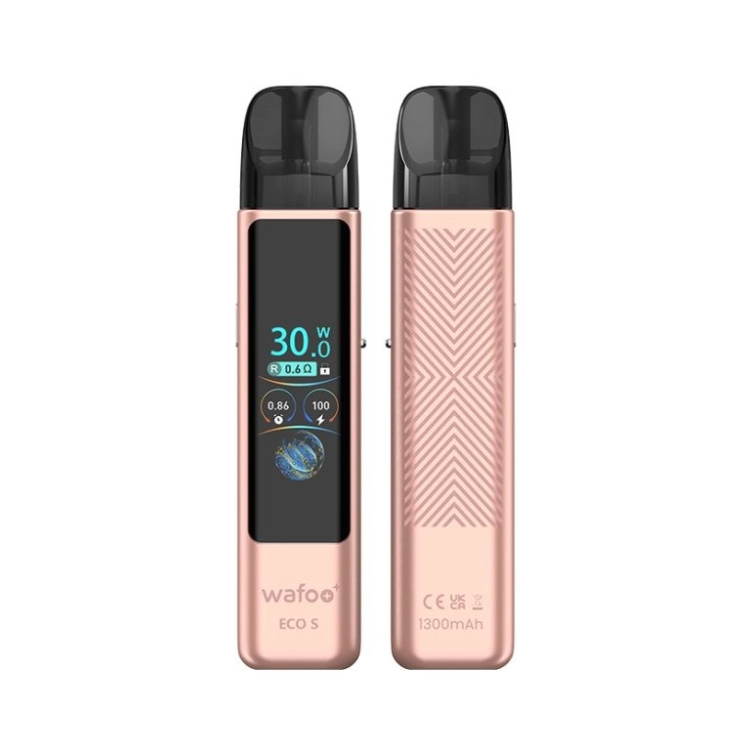
Branding moved through cartons, colours, mouthpieces and finishes. The tested configuration stayed intact, which kept the compliance file valid and the sample round short.
When Tooling Earns Its Cost
Tooling earned its fee when the shell itself sold the product. A shape no competitor carried, a housing that solved a grip or a leak problem, a form built around a component the stock range did not hold.
Volume decided whether that margin paid the fee back. That brand recovered the tooling cost inside two container loads, and it would have recovered faster had the terms named the inserts.
Conclusión
The fee bought a mould. Three more things needed writing down: who held the tool, which files travelled with it, and what the factory could do with the shell. The brand that ended up in that room had paid every invoice on time. It had never asked the release question, and the answer cost more than the tooling fee.
Preguntas frecuentes
Q1: Who owns the mould when a vape brand pays for it?
A1: The wording settles it, usually at payment. That brand paid in full and still asked permission to move the tool, because the terms named the fee and skipped the transfer.
Q2: Does a custom shell stay exclusive to one brand?
A2: Only when the terms said so. A shell specification, a period and a territory belonged in the clause, or the same housing showed up on another brand’s launch.
Q3: Can a brand skip tooling on a vape OEM project?
A3: Often yes. A stock platform carried branding through cartons, colours and finishes, which kept the tested configuration and the certification file intact.