
A refillable pod vape can look ready for market on a specification sheet. Tank volume, battery capacity, coil type, airflow control, and puff rating provide a reference, but they do not show whether several samples behave consistently. B2B approval requires a controlled review under relevant operating conditions.
Pod vape sample testing separates fixed hardware facts from results that change with use. Puff count, charging duration, coil life, and liquid consumption vary with draw pattern, airflow, mode, and method. A documented process exposes repeatable issues before artwork or purchase quantities are approved.
Set the Test Objective Before Reviewing Puff Claims
Puff figures support positioning, but they are not a complete test target. A high-capacity refillable pod may hold more liquid than a compact cartridge, yet tank size does not define operating time. Battery support, coil behavior, filling, and controls shape the usable cycle.
Define what the review must prove. It may confirm specification accuracy, refill handling, control repeatability, or power support. Commercial teams can then retain wording such as “up to” without turning a variable result into guaranteed days or puffs.
Establish the Fixed Specification Baseline
Begin with details that can be checked directly. This baseline gives every tester the same reference and makes later differences easier to investigate.
Record Fixed Hardware Specifications
Record tank capacity, battery configuration, resistance, coil type, airflow control, modes, charging port, dimensions, and package contents. Add the sample ID, version, date, and operator. The same values need to appear in the quotation, specification, label, and proposed packaging.
For designs with more than one power component, record each capacity separately and note how the parts are supplied. Combined mAh does not prove operating time, just as milliliters do not guarantee a puff total.
Separate Measurable Specifications From Variable Results
Tank capacity, resistance, dimensions, port type, and stated battery capacity can be checked against documents. Puff count, charging time, coil life, flavor delivery, and operating duration depend on test conditions. They need a stated method rather than one person’s impression.
This separation gives procurement, quality, and marketing teams a cleaner approval route and prevents a hardware value from becoming proof of an untested result.
Build a Repeatable Pod Vape Sample Testing Plan
A useful review is not casual use of one device. It uses identified samples, common conditions, and a consistent record so buyers can distinguish an isolated event from a repeatable issue.
Set Common Test Conditions
Use the same e-liquid, fill level, charging source, cable, and rest period for comparable samples where possible. Record room conditions, mode, airflow position, and draw pattern to remove avoidable differences between units.
Test more than one unit because one sample cannot represent a batch. Label each device, keep the same sequence, and repeat an observed issue on another unit before classifying it as isolated or systematic.
Run Airflow and Mode Comparisons
Review each airflow and mode setting separately. Record whether the control is clear, remains stable, and creates a difference retail staff can explain. Do not assume one setting will always consume less liquid or power.
Track visible liquid change, power status, control response, and interruptions. When status indicators are present, verify that their behavior matches the instructions rather than treating the display as a laboratory measurement.
Check Refilling and Daily Handling
Repeat the filling process and review the seal, airflow control, mode button, charging connection, and handling sequence. Check for residue near the filling area, changes in draw behavior, or steps that may be difficult to demonstrate.
Instructions must match the sample. Waiting time, leakage precautions, cable guidance, and indicator meanings need to be clear before artwork approval. Record each correction with an owner and closure date.
Check Whether Long-Use Claims Match the Results
Long-use positioning depends on connected components. The test therefore needs to follow the device through a meaningful part of its liquid and power cycle rather than treating one feature as proof.
Compare Coil Performance Across the Test Cycle
A dual mesh coil identifies the atomization structure, but it does not prove stronger output, lower consumption, or fixed flavor performance. Confirm resistance and modes, then compare samples with the same liquid and similar draw conditions. Record persistent changes in response, vapor, noise, or liquid behavior.
The goal is repeatability for the planned channel, not a universal claim from a small test. Confirm a result seen once and investigate patterns across identified samples.
Review Power Support Before the Tank Is Empty
For a large tank, record whether onboard power needs support while usable liquid remains. This connects the battery review to the tank cycle without creating a fixed puff estimate. Note when support is needed and whether operation resumes as described.
This shows how the handheld unit and separate power component work together. Judge the sequence and consistency across samples, not an unsupported claim about hours or days of use.
Document Charging and Connection Behavior
Review a power-bank device as one system. Record how the support component connects, whether the fit remains stable, and what happens after disconnection and
reconnection. Check available charging or power indicators against the stated sequence.
Type-C describes the interface, not charging time, cycle life, or safety performance. Those points require technical records and defined evidence. Sample approval can verify cable guidance, connection steps, visible status behavior, and consistency with user materials.
Compare the Approved Sample With Commercial Documents
A sample may perform acceptably yet create commercial risk when the quotation, artwork, packaging, or production specification differs. Document control must continue after practical testing.
Match the Golden Sample and Final Specification
Keep an approved golden sample as the physical reference. Tank capacity, battery configuration, resistance, coil type, modes, airflow, charging port, size, filling components, and accessories need to match the final order records.
Any difference requires written clarification before production. A changed coil, battery, seal, connector, or control method may affect training and packaging even when the exterior looks similar. Approved changes need a revised document version.
Review Packaging and Qualified Puff Wording
When a product carries an “up to” puff rating, keep the qualifier consistent across packaging, product pages, sales sheets, and distributor materials. Internal tests may support comparison, but they cannot turn an upper limit into a guaranteed retail result.
Packaging must match the approved market version for warnings, nicotine information, flavor name, charging instructions, and refill guidance. Successful hardware testing does not replace final artwork approval.
Confirm Market-Specific Versions
Flavor selection, nicotine strength, bottle size, labeling, and availability may differ by destination. Confirm the exact configuration before linking a device to an e-liquid range. The sample, packaging, and order documents need to identify the same regional version.
How XANDER Can Be Tested as a High-Capacity Example
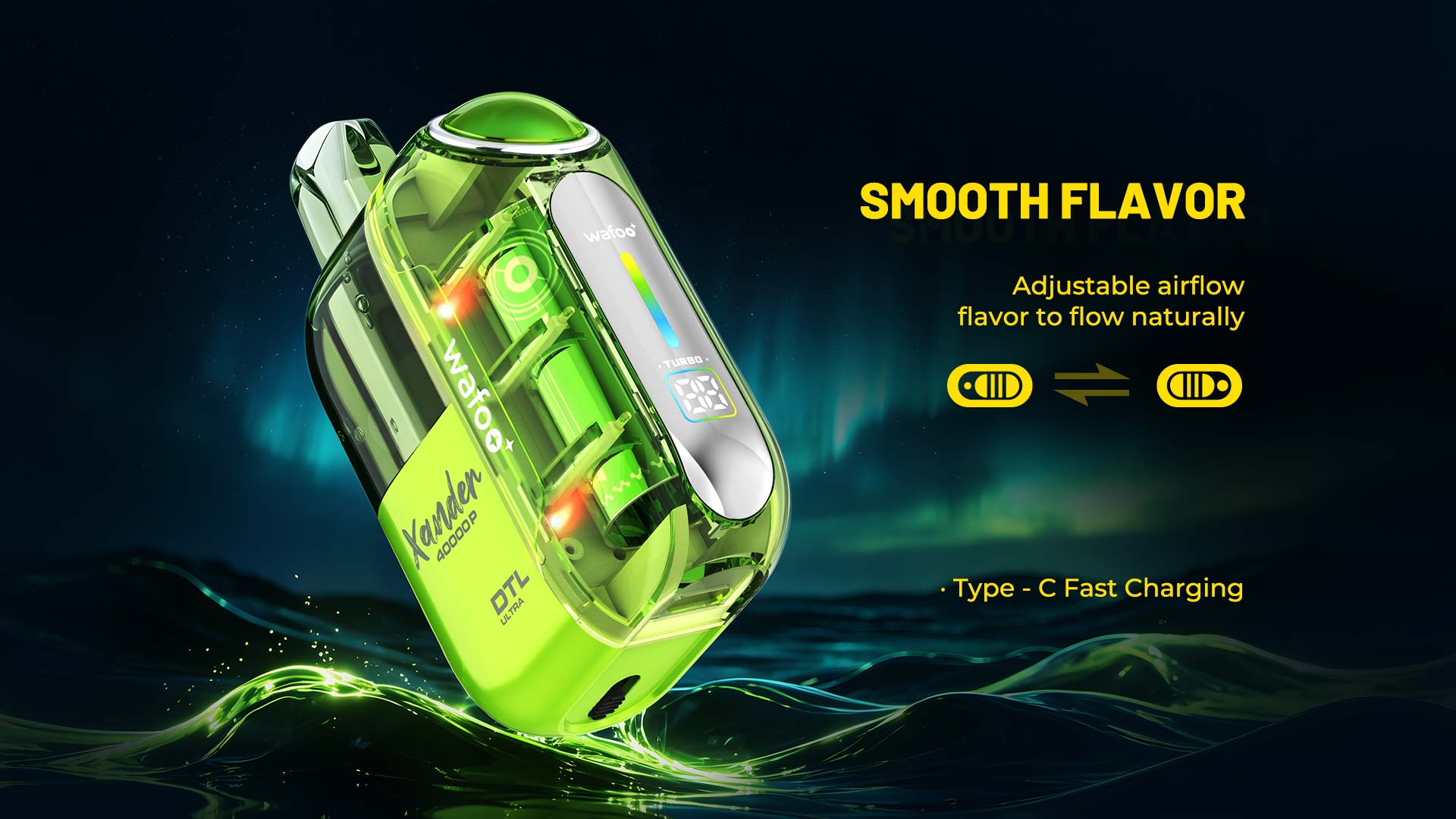
XANDER combines a 15 mL refillable transparent tank, power bank, adjustable MTL and DTL airflow, dual mesh coil, two modes, quick charging, and Type-C. Specifications also include a 300 mAh + 850 mAh battery configuration, 0.8 Ω × 2 resistance, and an up to 40,000-puff rating.
Testing can verify liquid visibility, repeat the refill sequence, compare airflow and modes, and check how the handheld device works with power support. Coil type, resistance, battery configuration, tank capacity, and package contents also need to match approved documents.
The up to 40,000-puff figure remains an upper limit, not guaranteed days or a fixed result. Outcomes may change with draw duration, mode, airflow, use frequency, liquid consumption, and test conditions.
What Buyers Should Approve Before Mass Production
Before approval, the buyer needs a controlled record that connects the tested sample with the final order, including:
- the identified golden sample, test record, and final specification;
- the approved tank, coil, resistance, battery, airflow, and mode configuration;
- the filling method, charging accessories, and user instructions;
- the final packaging artwork and qualified puff wording;
- the flavor, nicotine, and regional version for the destination market;
- the applicable compliance and battery documents requested for that market;
- the agreed process for reporting and approving production changes.
This record gives procurement, quality, marketing, and training teams one reference. It also supports later inspection by linking production units to a defined sample and approved document set.
Build the Order Around Verified Requirements
A reliable refillable pod program depends on verified specifications, repeatable results, and careful wording for variable outcomes. Large tank or puff figures cannot replace a controlled pre-production review.
Wafoo develops pod-system and disposable formats for different channels. Product choice still depends on the buyer’s market, testing criteria, assortment position, and approval standards.
Define tank capacity, draw style, battery structure, flavor plan, nicotine options, packaging, destination market, and acceptance points before approval. Share the sample findings and order requirements with the product team to review the configuration and close open items before production.
FAQ
Q: How should buyers test a refillable pod vape?
A: Verify fixed specifications, then test identified samples under common conditions. Record refilling, airflow, modes, coil response, battery support, and charging behavior. The approved sample also needs to match the final specification, packaging, and instructions.
Q: Is puff count enough to approve a high-capacity pod vape?
A: No. Puff count may be an upper-limit reference and depends on the test method. Buyers also need to assess tank capacity, resistance, airflow, modes, power support, liquid use, and consistency across samples.
Q: Which records need to match before mass production?
A: The golden sample, specification, test report, packaging, instructions, battery configuration, coil, resistance, tank capacity, controls, package contents, and market information need to describe the same approved version.