
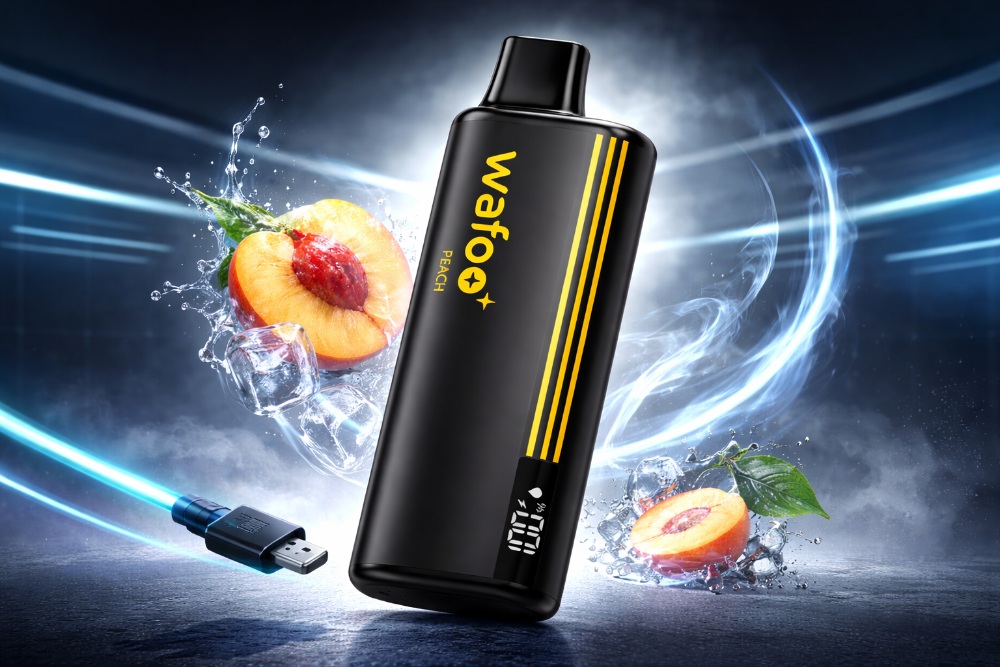
Buying decisions in today are more technical than they were a few years ago. Puff count still matters, but it is no longer the only figure that shapes a serious purchase decision. Buyers now compare battery support, liquid capacity, coil structure, charging convenience, and visible operating status before they decide whether a device fits a market, a channel, or a user group.
That shift has changed how a Rechargeable Disposable Vape should be evaluated. A device may look attractive on paper, yet fail in practical use if the battery runs weak before the e-liquid is fully used, if flavor drops too early, or if the user has no clear way to monitor power and liquid levels. For B2B buyers, the more useful approach is to judge the product as a complete system rather than as a list of isolated selling points.
This is especially relevant in a market where category scrutiny is increasing, and buyers are more cautious about repeat-order quality. A stronger product profile now depends on balance. It needs enough battery support for its liquid load, stable output across the life of the device, and a specification structure that can be explained clearly to distributors and retailers.
Why product selection looks different
The market has moved away from the old idea that a small device with a simple format is always enough. Many buyers now prefer models that offer longer usable life, clearer operating status, and a more dependable daily experience. This is one reason longer-lasting formats continue to gain attention across wholesale and private-label discussions.
A larger-capacity model can create real value, but only when the internal design supports that capacity. Battery size, charging format, resistance, and coil behavior all affect whether the device performs well from the first stage of use to the final stage. When these elements are not aligned, the product may look competitive in listings but perform poorly in real use.
That is also why the high puff vape category keeps attracting attention. The appeal is clear: fewer replacements, better continuity, and stronger perceived value. Yet the real question is not whether a device claims a high number. The real question is whether the architecture behind that number is credible and commercially sustainable.
What to check before comparing styles or flavors
Before discussing appearance, finish, or flavor range, it is better to examine the operating fundamentals. Buyers usually get a clearer result when they focus on four practical checks: battery and charging logic, liquid volume, coil structure, and display function.
Battery support must match the liquid load
Rechargeability has become more important because it helps a product use more of the liquid capacity already built into the device. A battery that stops too early weakens the value of the whole product. That problem becomes more visible as capacities increase.
A USB-C rechargeable vape is now easier to position across markets because it aligns with current charging habits and reduces friction in regular use. For distributors and importers, that matters because convenience supports both product acceptance and repeat purchase behavior.
Puff count only matters when it is technically supported
A large puff claim should always be read beside the liquid volume and battery support. Without that context, the headline figure has limited value. Buyers who compare puff count by itself often miss the more important question: can the device deliver stable use across the full operating cycle?
This is where the high puff vape segment becomes easier to assess. A strong product in this category should pair a meaningful liquid capacity with a rechargeable battery and a coil system that can maintain flavor stability. Without those three elements working together, the specification may look impressive but feel weak in practice.
Coil design affects consistency more than many buyers expect
Coil choice is no longer a minor technical detail. It has a direct effect on vapor smoothness, flavor retention, and output stability. In higher-capacity devices, those points become even more important because the coil has to stay reliable over a longer usage cycle.
A mesh coil disposable vape generally offers a more even heating pattern than older basic structures. For B2B buyers, this can support better user satisfaction because the product feels more consistent from early use to later use. It also helps the device hold its flavor profile more effectively.
Why visibility has become part of product value
Many purchasing decisions now include one more question: Can the user see what is happening during use? That question has pushed monitored-use devices further into the mainstream.
A Disposable vape with clear operating feedback is easier to use and easier to explain. Battery visibility reduces guesswork. Liquid visibility helps users judge remaining capacity more accurately. These small improvements create practical value because they reduce uncertainty and make the device feel more controlled.
This is one reason the smart vape segment has expanded. In commercial terms, a smart vape does not need to rely on novelty. Its value comes from helping the user manage use more clearly. A rechargeable vape with screen functions can support that goal without making the product too complex for mass-market channels.
A vape with a battery display or a vape with an e-liquid display also improves product communication at the retail level. The benefit is immediate and easy to explain. Instead of relying on a broad performance claim, the product shows part of its value directly during use.
How this looks in a real product example
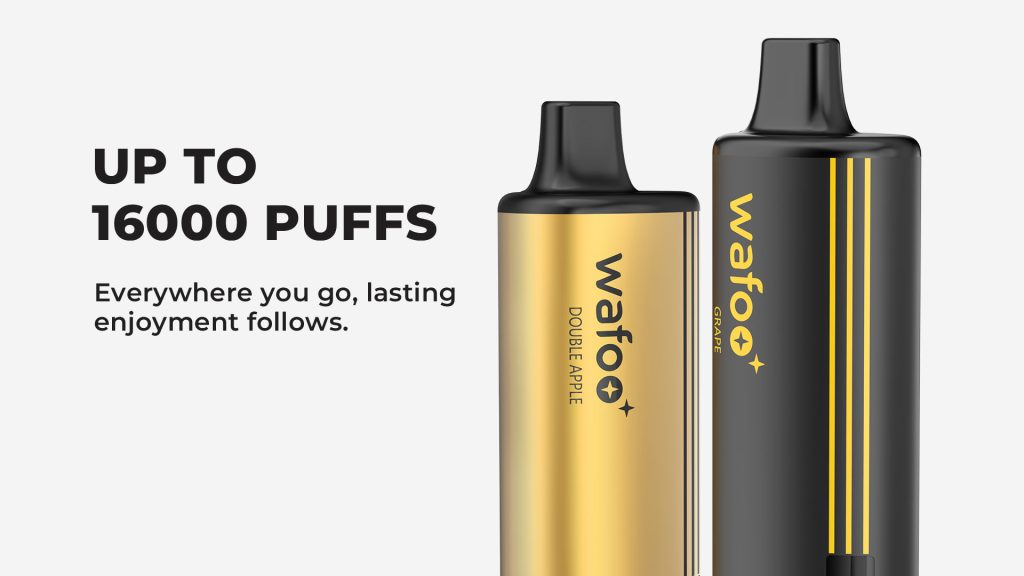
The practical checks above become more useful when applied to a real model. In the mid-to-late stage of product evaluation, it makes sense to look at a device that combines several of these priorities in one format. That is where WAFOO 16000 enters the discussion naturally.
This model is built around a 600mAh rechargeable battery, 16ml e-liquid capacity, 1.2Ω mesh coil, USB-C fast charging, digital screen, and 5 mg/ml nicotine salt. It is positioned for up to 16,000 puffs. From a B2B perspective, that specification mix gives buyers a clearer way to judge whether the product is built for real continuity rather than for a single headline claim.
The balance is the key point. The 16ml disposable vape format supports the 16000 puff vape positioning more credibly than a smaller-capacity design would. The rechargeable battery helps the device use more of that liquid load. The mesh coil supports smoother and more stable delivery. The digital screen adds a monitored-use advantage that fits current buyer expectations for a digital screen vape.
This is also where the Disposable vape category shows its newer direction. Instead of relying only on convenience, the product adds visible status, a stronger operating balance, and a more structured specification profile. For buyers looking at a long-lasting disposable vape or a nicotine salt disposable vape, those details matter more than cosmetic differences.
How we think about product design at Wafoo
At Wafoo, we do not treat product development as a race to stack features without purpose. We place more weight on whether the battery, liquid system, coil, and display work together in a practical way. That principle shapes how we approach newer device formats and why we continue to move toward products with clearer operating logic and stronger specification balance.
That direction also reflects the broader product philosophy behind our lineup and brand development. Buyers who want to review how we position design, product evolution, and category direction can see that approach more clearly through our brand story.
For B2B channels, this matters because different markets do not need the same solution. Some customers want a simple model with a visible operating status. Some prefer a more advanced smart vape profile. Some focus on longer use cycles and want a stronger Rechargeable Disposable Vape format that can sit confidently in the high-capacity segment. Product matching is more useful than one-size-fits-all selling.
A practical conclusion for buyers
The most reliable choice in today is rarely the one with the loudest claim. It is the one with the most credible balance between battery support, liquid volume, coil stability, charging convenience, and visible status. That is the standard buyers should use when screening new models.
For serious evaluation, four checks remain the most useful: battery and charging structure, liquid capacity against puff count, coil type, and display logic. When those elements align, a product is easier to position, easier to explain, and more dependable in repeat business.
A Rechargeable Disposable Vape should therefore be judged as a complete operating system, not as a single number on the box. Buyers who need clearer product matching, specification comparison, or project-based model selection can contact us for the next step.
FAQ
Q: How should buyers judge a device beyond puff count?
A: Puff count should be reviewed together with battery capacity, e-liquid volume, coil type, and charging format. Those factors show whether the product can support the claim in regular use.
Q: Why is the mesh coil still important in newer devices?
A: Mesh coil supports more even heating and stronger flavor consistency. In larger-capacity products, this helps maintain output quality across a longer usage cycle.
Q: Does screen visibility create real commercial value?
A: Yes. A visible battery or liquid display improves user control, reduces guesswork, and helps distributors and retailers explain product value more clearly.