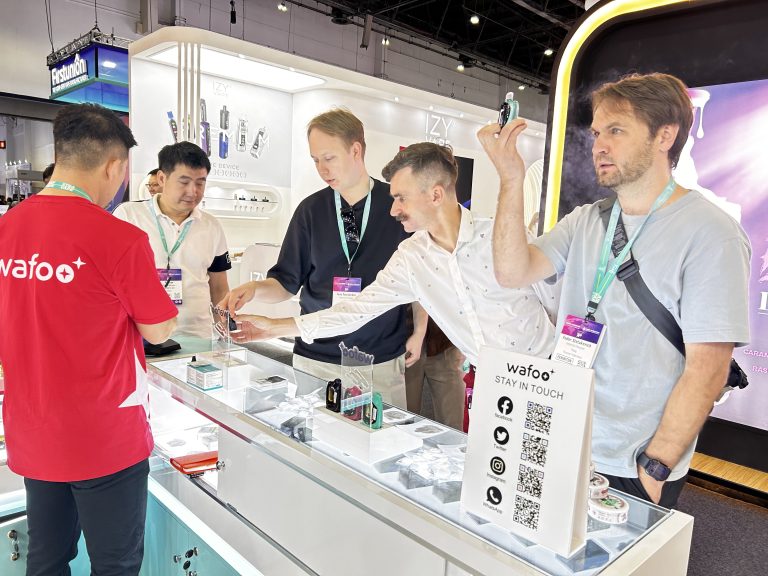

The margin in a vape shop is rarely made on the device at the front of the counter. Entry hardware is priced to move — it is the acquisition cost of a consumable customer — and a discount-chain competitor two streets over will always find a way to shave another unit price. What that competitor cannot easily clone is the small, high-turn merchandise that rides along with every device sale: the cable that fails first, the lanyard that stops the second device from meeting the pavement, the spare pod that converts a walk-in into a repeat, the display that makes the case read as a category instead of a pile. Accessory attach is the quiet lever on a vape retailer’s P&L, and it works without the shelf clutter that kills category credibility.
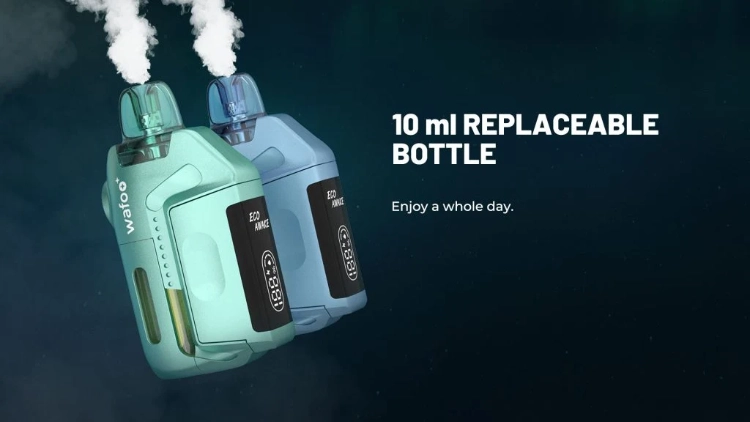
This guide covers the accessory categories that actually earn their facings, how each maps to the device types on your shelf, where to place them so attach rates rise without visual noise, and how to buy them as part of a product-line order rather than as an afterthought at a trade-show booth.
Why Accessories Are the Margin Lever
Three numbers frame the case before any category detail.
Attach rate over margin rate. A charger that costs a few units of currency and sells at a healthy multiple moves once per device sale at best — but its margin dollars per linear meter of counter space beat most hardware. Accessories are small-format merchandising: the same shelf foot that displays six devices can display forty accessory units.
Failure-driven demand. Accessories are bought most often when something breaks or gets lost, and the replacement window is hours, not weeks. A customer whose cable stops fast-charging on day twenty will buy at your counter at your price, because waiting is not an option. This is inelastic, urgent demand — the best kind a counter can host — provided you stock the right cable for what you sold.
Basket frequency. Every accessory purchase is a reason to walk in. Lanyards, replacement pods, and cleaning supplies generate trips that the device replacement cycle never would. Trips convert.
The clutter risk is real, though. Accessory walls fail when they stock generic SKUs in six colours nobody asked for. The categories below are selected for one criterion: each one maps to a failure mode, a loss mode, or a usage upgrade tied to a device type you are already selling.
The Accessory Categories That Earn Their Facing
1. Cables and charging hardware
The single highest-attach accessory in the category. Modern devices have largely standardised on USB Type-C — Wafoo’s pod platforms such as the ECO-series kits charge over Type-C, as do most current pod system devices — but the customer arriving with a failed cable owns a micro-USB drawer at home and an older wall brick that cannot deliver the right current. Stock three tiers: a short in-pocket Type-C cable, a braided longer cable, and a wall adapter rated for the charge current your devices actually draw. Two rules: never stock a cable that does not match at least one device family you sell, and price the cable next to the device it charges, not in a bin with everything else.
2. Protection: lanyards, chains, and cases
The second-hand vape is a dead vape — a device dropped on concrete has a cracked tank or a bent contact more often than retailers admit, and the replacement sale you save (or lose) depends on whether the customer had protection from the first day. Silicone sleeves fit the rounded body formats of most pod and disposable lines; lanyard chains attach to a loop hole or a sleeve and stop the table-drop entirely. These are impulse-priced items that belong at the point of transaction for exactly this reason. They also carry no compliance burden in most markets: no battery, no liquid, no notification.
3. Replacement coils and pods
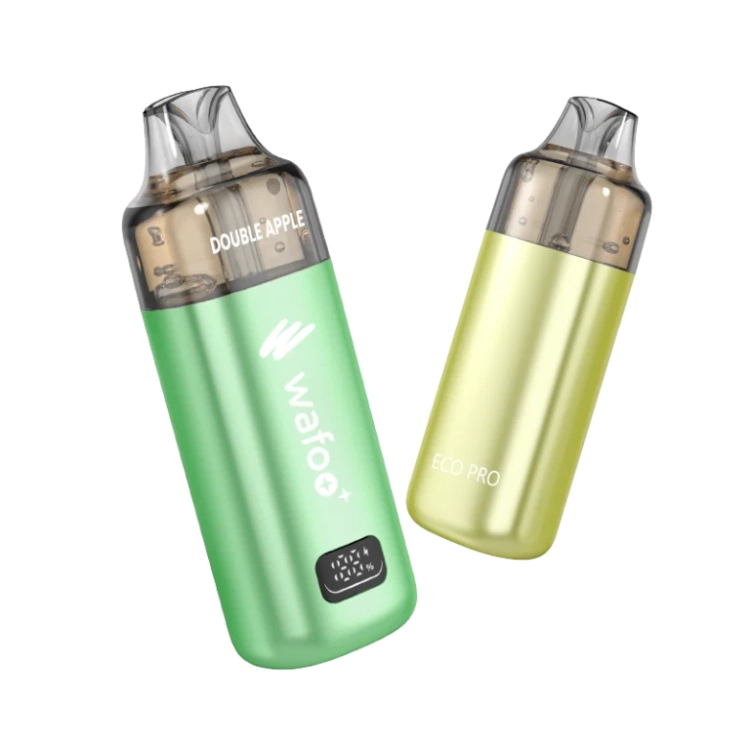
If your store sells open-vape devices, the coil is the consumable, and the accessory plan fails if the customer can find the coil anywhere but your counter. Keep coil and pod stock married to device families with a printed compatibility card at the shelf — the most common service complaint in the category is “which coil fits this,” and answering it at the facing converts browsing into buying. For pod ecosystems, the pods themselves are the accessory program: three to five flavours per ecosystem, never orphaned by a half-stock, which is why pod reorder discipline belongs in the same purchase order as the devices. Your supplier’s product range page is the reference for which consumables stay in production; for Wafoo platforms that is the products catalogue and the pod category behind it.
4. Display, trial, and counter hardware
The accessory category that serves your staff rather than the customer: counter displays with locked or open compartments, tiered pod stands, and signage rails. A tiered acrylic stand holding one ecosystem’s pod flavours at register height does more for sell-through than the same pods lying in a drawer case, because it converts a request-led purchase into a seen-and-taken purchase. Buy display hardware in the same order as the first device shipment — displays arriving three weeks late means three weeks of drawer merchandising that never gets fixed after the fact.
5. Hygiene and maintenance smalls
Cleaning swabs, contact-point brushes, tank-safe wipes, and silicone grease for rebuildable setups. Low unit price, low competition at the counter, and they position the staff as the people who keep devices working rather than merely sell them. One facing is sufficient.
6. Carry and travel
Travel cases, hard sleeves, and liquid-bottle pouches for the customer who flies or commutes. These matter disproportionately in markets where devices are regulated heavily and the customer is trained to transport them carefully — cases sell well wherever press coverage of transit rules has recently run. A hard case with a liquid-bottle pocket sells as a family purchase in airport-adjacent catchments; in others it is a seasonal item. Treat it as a seasonal facing, not a permanent one.
7. Replacement mouthpieces and drip tips
The most forgotten consumable in the category is the mouthpiece itself. Shared devices, hygiene-conscious customers, and cracked plastic tips on dropped units all drive replacement sales, and drip tips double as a personalisation purchase — the vape equivalent of a phone case. If your store carries open-system devices, a wall of inexpensive resin tips in two connector sizes is a low-risk, high-attrition facing: cheap to buy, no compliance load, and every unit sold refreshes the customer’s contact with your counter.
8. Gift bundles and starter kits (assembled by you)
Not a manufactured category so much as an assembly play: a pod device, two pod packs, a cable, and a lanyard bundled at a rounded price is the highest-margin basket on the counter, and it converts a hesitant walk-in because the decision becomes “the kit” rather than four small decisions. The economics work because the bundle moves sell-through on accessories that would otherwise sit; the merchandising works because one box answers the new-customer question completely. Bundles fail when the parts do not fit each other, so build them from one device family at a time.
What not to stock
Equally useful is the exclusion list. Generic “universal” coil packs that claim to fit eight device families fit none reliably and generate the returns that poison a compatibility reputation. Novelty-shaped chargers with unknown current profiles can underpower or stress a device’s charging circuit and land the complaint on your brand. Overstocked colour variants of a single accessory eat a facing and die. And in regulated markets, any accessory that quietly contains a nicotine capsule or battery without its own compliance documentation is not an accessory — it is a compliance incident waiting for an inspection day.
Placement: Attach Without Clutter
The clutter complaint from customers is almost never “you have accessories”; it is “I cannot find what fits my device.” Vape accessories sell when the shelf answers the customer’s fit question on sight. Solve the findability problem and density stops reading as clutter.
Register zone (decisions under ten seconds). Cables, lanyards, sleeves, swabs. Carded, eye height, within arm’s reach of the payment point. This zone carries one SKU per colour-option, not three.
Device-pair zone (decisions with a question). Coils, pods, and wall adapters merchandised at or beside the device they serve, with the compatibility card printed at the shelf edge. The zone answers the customer’s actual question — fit — instead of asking them to remember a model name.
Feature zone (one rotating story). A single tiered display running the current push: a new pod flavour drop, a seasonal bundle (device + two pod packs + cable at a rounded basket price). One story at a time; a second story halves the attention on both.
A useful discipline: if an accessory SKU has not sold in sixty days at the counter, it does not get a facing next cycle — it gets a drawer or a return. Faces are rented, not owned.
Measuring what the layout actually earns
Three numbers, reviewed monthly, keep the accessory program honest:
Attach rate by zone. What share of device sales leave with a register-zone item (cable, sleeve) and with a device-pair item (coil, pod, adapter)? A register zone that attaches below a quarter of transactions is a placement problem — the item is either invisible at payment height or the price breaks the impulse.
Consumable sell-through per device family. Pods and coils per device sold per month. This is the real signal of whether your install base is buying consumables from you. A family selling devices but no consumables is exporting its customers to someone else’s shelf.
Accessory gross-profit per linear meter. The clutter argument, quantified. Compare it against the same meter given to a device facing. Accessories normally win this comparison — and when one facing loses it, that is the facing to cut, not the category.
Retailers who run these three numbers stop arguing about accessories by taste and start running them like the grocery trade runs end-cap space: priced, measured, and rotated.
Ordering Accessories With the Device Line
Buying accessories as a separate late transaction is where retailers lose the economics. Three practices fix it.
Bundle the purchase order. When you order devices, the order should carry the cable that matches them, the sleeve that fits their body, and the consumable they burn through first. A wholesale supplier that publishes device dimensions and port types makes this arithmetic easy; one that does not is telling you its accessory supply will be improvised.
Set attach targets per family, not store-wide. “Cables on 40% of device sales, sleeves on 25%, consumable in the same basket 80% of the time” — measured per device family, because an open-system mod buyer and a disposable buyer attach completely differently. Targets without family segmentation just average the mix into meaninglessness.
Reorder on consumable velocity. Device sell-through tells you the install base; consumable sell-through tells you whether that base is buying from you. If a pod ecosystem’s device sales hold while pod orders sag, the customers are refilling elsewhere or buying substitute pods, and the fix is flavour depth and shelf presence, not a discount.
For buyers building a first order around a manufacturer’s platform, the conversation with the Wafoo wholesale team can cover device, consumable, and accessory mix in one pass — including minimums per flavour and carton configurations for mixed layers. Where your market requires compliance paperwork before sale, the same thread carries the TPD certification documentation and the product verification tool your retail customers can use to authenticate packaging in store, which is itself a counter-level trust accessory worth stocking awareness of.
The Bottom Line for Counter Merchandisers
Accessories are the part of a vape shop that automation and discounting cannot easily take away, because they are sold at the moment of need, at the counter, by the person who knows which coil fits which device. Stock the failure-driven categories — cables, protection, consumables — in the depth your device families demand; place them in zones that answer the customer’s question instead of asking them to remember a model name; buy them on the same purchase order as the hardware; and measure attach, consumable velocity, and gross profit per meter every month. Do that for two reorder cycles and the accessory line will show up where it belongs: as the most reliable margin line on the P&L, without a single extra centimetre of visual clutter on the counter.
Frequently Asked Questions
Q1: Which vape accessory has the highest retail attach rate?
A: Charging cables, consistently. Cable failure and loss are near-universal, replacement is urgent, and the item is small enough to sell at the payment point without a fitting question. The practical requirement is matching the cable to the device families you sell — stock Type-C for modern pod hardware and micro-USB only for legacy lines you actually carry.
Q2: Do accessories need the same compliance paperwork as devices and liquids?
A: Non-nicotine, non-battery accessories — cables, sleeves, lanyards, displays, cases — generally sit outside nicotine-product notification regimes in most markets. Products containing a battery or liquid carry their own obligations. Confirm per destination market; your manufacturer’s compliance documentation trail (for Wafoo, the certification page) covers the regulated items, and plain accessory lines are typically the easy part.
Q3: How many accessory SKUs before a counter looks cluttered?
A: Clutter is a findability failure, not a count. Retailers run tidy counters with forty SKUs when every item is carded, zoned (register / device-pair / feature), and shelf-labelled with the device it fits. The failure mode is six colour variants of the same lanyard in a bin. Cut duplicate variants first, then reassess.
Q4: Should accessories be bought separately from the device order?
A: Avoid it. Vape accessories ordered after the devices arrive mean unmerchandised devices at launch and lost attach from day one. Put cables, sleeves, and first-cycle consumables on the same purchase order as the hardware, with carton mixes arranged so the first layer of each carton is the facing quantity, not a brick of one SKU.