

A disposable vape screen usually separates battery status from remaining e-liquid status. That distinction matters when a vape is almost empty because a low battery does not automatically mean the liquid is gone, and a low liquid reading does not always mean the device needs charging. In a rechargeable disposable vape, the screen is best treated as an operating guide rather than an exact countdown of puffs, milliliters, or usable hours.
The practical question goes beyond what a vape screen shows. Distributors also need to connect each reading with charging, liquid use, coil condition, and end-of-use handling. A disposable vape with screen feedback reduces guesswork only when its icons and instructions agree.
Start With Two Separate Readings
A screen may combine several icons, yet the information normally falls into two groups: stored electrical energy and available e-liquid. Reading them separately prevents staff from treating every interruption as proof that the device is empty.
What the Vape Battery Display Indicates
A vape battery display shows the device’s reported power status through bars, a percentage, a colored symbol, or another visual scale. The format varies by model, so packaging and instructions need to explain each state.
A low reading may indicate that charging is required on a rechargeable disposable vape. It does not confirm battery damage or show exact draws remaining. Draw duration, frequency, resistance, and control logic all affect energy use.
Type-C or USB-C identifies the charging interface, not a fixed charging time or battery cycle life. The sample, cable guidance, indicator sequence, and final instructions should describe the same routine.
What the E-Liquid Display Indicates
An e-liquid display reports remaining liquid through a bar, drop symbol, percentage, or staged warning. It helps indicate when the vape is almost empty.
The reading is not necessarily an exact measurement. Tank shape, position, sensing logic, and liquid movement may affect the status. A transparent tank and the display provide different forms of feedback.
For retail communication, “remaining liquid indicator” is more defensible than “exact liquid meter” unless the measurement method has been validated.
Read the Screen by Situation
Compare the battery and liquid readings at the same time. Four situations cover most support questions.
Battery Low While E-Liquid Remains
When the vape battery display is low but the e-liquid display still shows liquid, the device may need charging before use can continue. This is one reason rechargeability matters in larger-capacity products: the battery may require support before the reservoir reaches its final stage.
Charging should follow the product instructions. Do not promise that a specific number of minutes restores a fixed amount of use. If power status changes after charging but the device still does not operate, another part of the system may be involved.
Battery Power Remains While E-Liquid Is Low
A battery reading can remain available while the vape is almost empty. Additional charging will not restore liquid, even if the device still activates.
Consider the liquid indicator with visible tank information, output behavior, and model instructions. Battery and liquid status describe different resources and need not reach zero together.
Both Readings Are Low
When both indicators are low, the vape is almost empty or near the end of its intended cycle. Remaining time cannot be calculated from the screen alone because draw length, frequency, and calibration affect the final stage.
A disposable vape with screen feedback can make this stage easier to recognize, but it should not encourage disassembly, refilling a sealed structure, or removing an embedded battery.
The U.S. Environmental Protection Agency advises against placing lithium-battery devices in household trash or curbside recycling and recommends suitable collection or household hazardous-waste channels. Destination-market guidance should be checked before packaging approval.
The Screen Looks Normal but the Device Does Not Activate
A normal disposable vape screen does not prove that every operating part is working. Airflow interruption, activation response, liquid delivery, coil condition, or an internal connection may still affect output.
Review the screen response, charging indication, airflow path, and instructions without opening or modifying the body. For sample review, record the issue against the sample ID and check another unit before treating it as systematic.
Quick Screen-Diagnosis Reference
This reference supports consistent answers, although final wording must remain model-specific.
| Screen situation | Likely meaning | Next practical check | Do not assume |
| Low battery, liquid remains | Charging may be needed | Port, cable, charging indication | The device is empty |
| Battery available, low liquid | Liquid cycle may be ending | Indicator and visible level | Charging restores liquid |
| Both indicators low | Cycle may be near its final stage | Instructions and disposal guidance | Exact puffs remain |
| Screen normal, no output | Another issue may exist | Airflow and activation response | Screen confirms coil condition |
| Reading changes suddenly | Status may be estimated | Position and repeated readings | Display is a laboratory meter |
The table does not replace the approved user guide. Icon names, warning meanings, and charging language must match the commercial sample.
What a Disposable Vape Screen Cannot Confirm
A screen cannot confirm exact puffs, exact milliliters, coil life, flavor quality, charging certification, or battery cycle life. Those points require specifications, test methods, or technical records.
An “up to” puff figure is an upper-limit reference, not a live counter that predicts identical results for every user. Draw pattern, frequency, airflow, resistance, and test conditions may change the outcome.
A vape battery display gives operating feedback but does not replace battery documentation. The liquid indicator also cannot prove that the wick is evenly supplied at every moment.
Product pages and packaging should describe the screen as a status feature. Claims such as “exact remaining puffs” or “perfectly accurate liquid level” create unnecessary risk without evidence for the production version.
Why Rechargeability Matters Before the Liquid Runs Out
A larger reservoir may retain liquid after the first charge is depleted, so a rechargeable disposable vape needs charging support for the intended liquid cycle.
Battery capacity may affect size, weight, charging routine, and cost. Review it beside resistance, coil structure, liquid volume, and expected operation.
A disposable vape with screen feedback makes the relationship easier to explain. The battery indicator addresses power, while the e-liquid display addresses remaining liquid. Neither reading proves the other.
For wholesale approval, charging icons, low-power warnings, and instructions should match the tested version. Hardware or control changes may require another review before artwork release.
How the Screen Logic Applies to a 16 mL Device
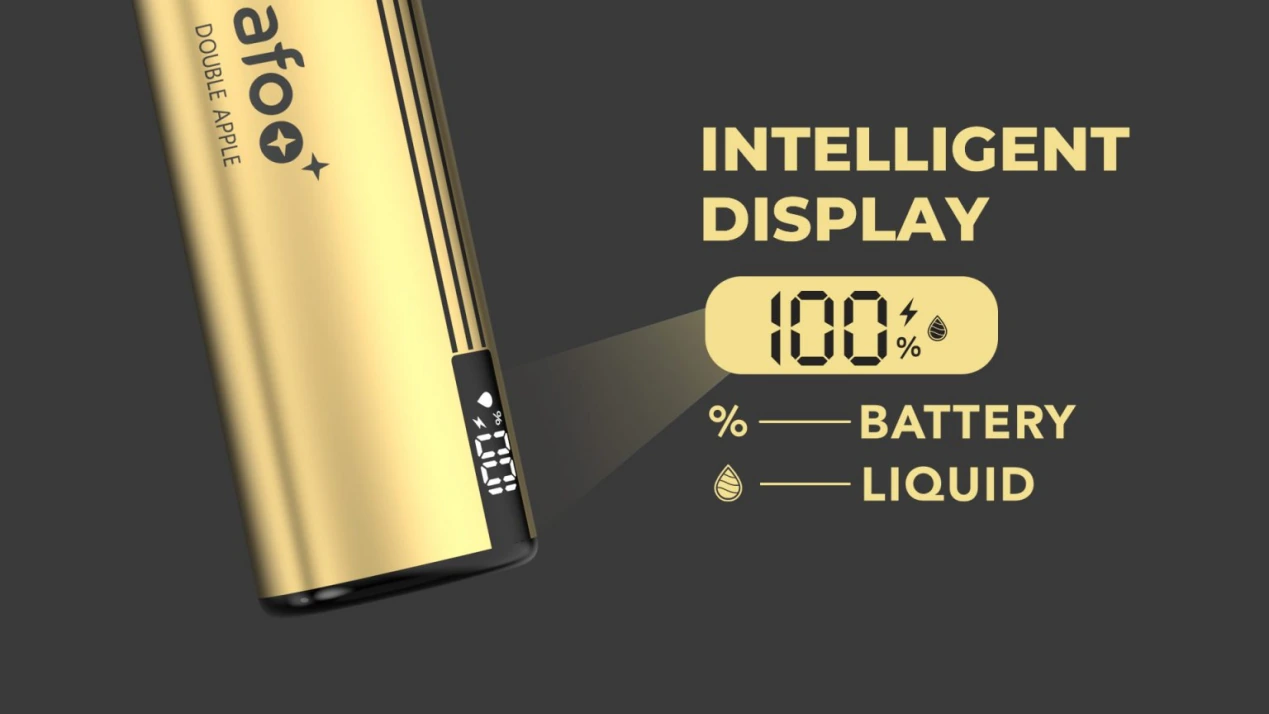
WAFOO 16000 combines a 16 mL e-liquid capacity, 600 mAh rechargeable battery, 1.2 Ω mesh coil, USB-C charging, digital screen, lanyard, and an up to 16,000-puff positioning. These values describe different parts of the product and should not be converted into one guaranteed duration.
The 16 mL figure describes liquid capacity, while 600 mAh describes stored battery capacity. The digital screen adds operating feedback, but the exact battery and e-liquid information shown should be confirmed against the approved sample and market version. The up to 16,000-puff figure remains method-dependent.
This configuration shows why a rechargeable disposable vape needs separate battery and liquid communication when a larger reservoir is paired with rechargeable power.
Wafoo develops disposable, pod-system, and e-liquid formats for different channels. Selection still depends on the target market, nicotine option, packaging requirements, and available retail training.
Signs to Check Beyond the Screen
When the vape is almost empty, the display is only one part of the assessment. Also check visible liquid, activation response, charging behavior, and output changes.
No single sensory change is definite proof. Output may change because of liquid status, power, airflow, or coil behavior, so commercial guidance should describe several observable signs.
Repeated failure, physical damage, swelling, unusual heat, or a damaged port should lead to removal from use, not repair instructions.
For a related product-level example, explore screen and USB-C charging in everyday use for a rechargeable 16 mL format. Each feature serves a different role and should remain separate in product communication.
Build Screen Requirements Into the Product Brief
Before ordering a disposable vape with screen functions, define which battery and liquid states need to appear, how the icons should behave, what warnings require action, and how the information will be explained on packaging. For B2B approval, a rechargeable disposable vape with screen functions should provide clear, repeatable feedback across approved samples and final production units.
The brief should identify liquid and battery capacity, resistance, coil type, charging port, nicotine option, destination market, package contents, and sample acceptance points. Check screen behavior across several identified units.
Review the wider disposable vape range after the display and capacity requirements are clear.
When the project details are ready, share the screen, capacity, and packaging brief with the product team. A clear request supports useful sample testing and reduces late changes to artwork or retail instructions.
FAQ
Q: What does a disposable vape screen normally show?
A: A disposable vape screen may show battery status, e-liquid status, or both, depending on the model. It can use bars, percentages, icons, or staged warnings. The approved instructions should define each symbol because layouts and calculation methods vary.
Q: Can the battery remain high when little e-liquid remains?
A: Yes. Battery energy and remaining liquid are separate values, so the battery may still show available power when the liquid cycle is near its end. An e-liquid display, visible tank information, and model instructions provide a more complete assessment.
Q: Does charging restore a device with no e-liquid left?
A: No. Charging adds electrical energy; it does not replace e-liquid. If the vape battery display rises after charging but the liquid status remains empty, further charging will not restore the reservoir. Follow the approved end-of-use process.